

Quick answer
A grand canyon hiking trip planner works backward from the heat: the park stays open 24 hours a day, but the best arrival window is 06:00–09:00, when you avoid midday temperatures and secure parking before trailheads fill. The individual pedestrian entrance fee is 120 USD. Plan your route, water, and turnaround time before descending from the South Rim.
The Grand Canyon punishes the confident. Rangers pull more hikers off its trails for exhaustion on the climb out than for any misstep on the way down, because the terrain runs upside down: the easy part comes first. A sound grand canyon hiking trip planner treats the descent as the halfway point, not the destination. From the South Rim, the ground falls away nearly a mile to the Colorado River, and every foot lost must be regained in thinning shade. That inversion shapes every choice. The park never closes — its gates read 00:00–23:59, seven days a week — but the trailheads at Grand Canyon Village fill early, and the canyon holds heat like a kiln by late morning. Planning a South Rim day hike means reading distance in hours, not miles. The corridor routes, Bright Angel and South Kaibab, drop toward landmarks like Ooh Aah Point, Cedar Ridge, and Havasupai Gardens, each a natural turnaround for hikers who respect the return leg. Overnight travel below the rim requires a backcountry permit, a detail that separates a casual walk from a committed expedition. Context makes the numbers make sense. Grand Canyon trail planning is less about peak-bagging and more about self-restraint — knowing that mule trains share the switchbacks, that water is scarce between developed points, and that Phantom Ranch sits far enough down that most day hikers never see it. The address is simple, South Rim, Grand Canyon Village, AZ 86023, but the geography is not. A visit built around Grand Canyon landmarks like Yavapai Point and Mather Point rewards those who pair short rim walks with a single, well-judged descent. What a hiker does with the answer matters more than the answer itself. Turn around with energy to spare, carry more water than feels reasonable, and let the clock, not ambition, call the turn. Used well, a grand canyon hiking trip planner is a discipline rather than a checklist — a way of matching a body to a landscape that has humbled far stronger ones. The park's own guidance, published at nps.gov/grca, echoes the same theme: down is optional, up is mandatory.
“Down is optional; up is mandatory — plan every hike around the climb back out.”
Grand Canyon Hiking Trip Planner: Single-Day and Multi-Day Route Itineraries
This planner suits day hikers testing a rim-to-river-to-rim push and those pacing a two-day corridor route with an overnight below the rim. Plan on a full 10-12 hour single day, or roughly 24-30 hours split across two days.
Start at South Kaibab Trailhead
Begin the descent early from the trailhead near Yaki Point; budget 3-4 hours down to the Colorado River for strong day hikers.
Reach the river at Bright Angel
Cross to Bright Angel Campground area, refill water, and rest 30-45 minutes before committing to the climb back.
Turn and climb toward the rim
Ascend via Bright Angel Trail; the return runs 4-6 hours and is slower than the descent, so pace conservatively.
Finish at Bright Angel Trailhead
Arrive back near Grand Canyon Village; single-day rim-to-river-to-rim is only for experienced, well-conditioned hikers.
Multi-day alternative: descend to Phantom Ranch
For a safer split, hike South Kaibab down and overnight near Phantom Ranch, reserving well ahead.
Ascend Bright Angel with fresh legs
Climb out over 4-6 hours after a rest night, breaking the elevation gain across two days.
Match your route to fitness
Choose the two-day corridor loop over the one-day push if you are unsure; the canyon rewards conservative planning.
Reserve guided routes via the site
Overnight corridor permits and guided hikes are limited; use the booking pages to secure a spot before you travel.
Grand Canyon Hiking Trip Planner: Optimal Seasons and Best Times to Hike
The optimal seasons for a Grand Canyon hiking trip are spring and fall, specifically from April to May and September to October. These months avoid both the dangerous summer heat in the inner canyon and winter trail ice.
Spring (March–May)
Moderate crowds, increasing in May50°F–70°F rim, 70°F–90°F inner canyon
Spring offers blooming wildflowers and comfortable daytime temperatures. Hiking early helps you avoid the strong afternoon sun on the ascent.
Summer (June–August)
Peak crowds, busy trailheads80°F–85°F rim, over 100°F inner canyon
Temperatures at the canyon floor frequently exceed 100°F, creating extreme hazards. Early morning starts before 06:00 are necessary to complete major climbs.
Fall (September–November)
Lower crowds, quieter trails50°F–75°F rim, 70°F–90°F inner canyon
This period provides stable weather and cool conditions. Early autumn is excellent for long trips before the North Rim closes in mid-October.
Winter (December–February)
Minimal crowds, quiet viewpoints30°F–45°F rim, 50°F–60°F inner canyon
High elevations bring snow and ice to the upper trails. Shorter daylight hours require careful planning, though inner canyon temperatures remain mild.
Weekday mornings
Quiet trails, easy parking—
The best arrival window is 06:00–09:00 to avoid extreme midday heat and secure parking before trails get crowded.
Verdict: Aim for a mid-week trip from Tuesday to Thursday in late April or October, starting each hike by 06:00.
Route Selection: Highlight Trails for a Grand Canyon Hike
The Grand Canyon features several designated corridor trails that descend from both the North and South Rims. These paths showcase distinct geological layers and historic rest structures for hikers.
Bright Angel Trail
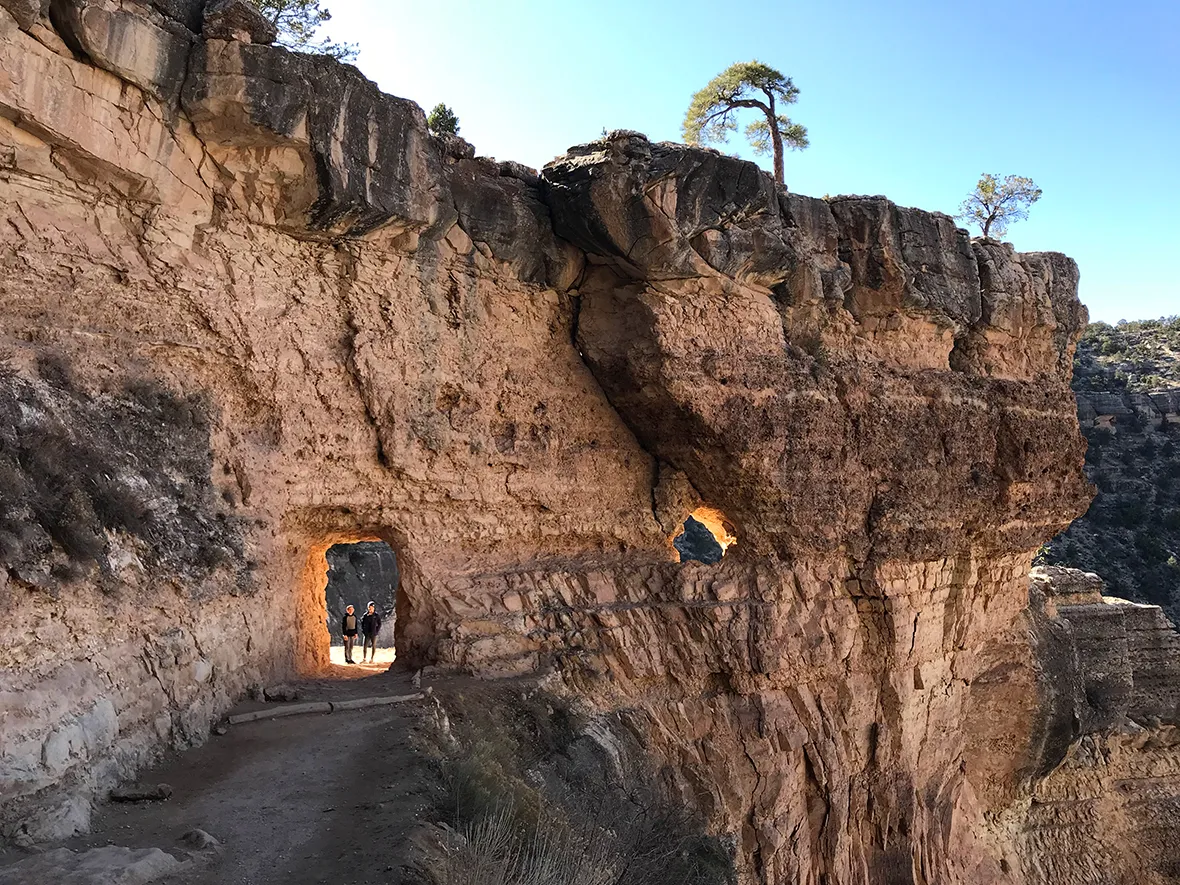
This historic path descends from the South Rim along a natural fault line, offering shaded rest houses and seasonal water stations. It provides a relatively gradual descent compared to other inner-canyon trails.
Walk down to the first tunnel for a framed canyon photo.
South Kaibab Trail
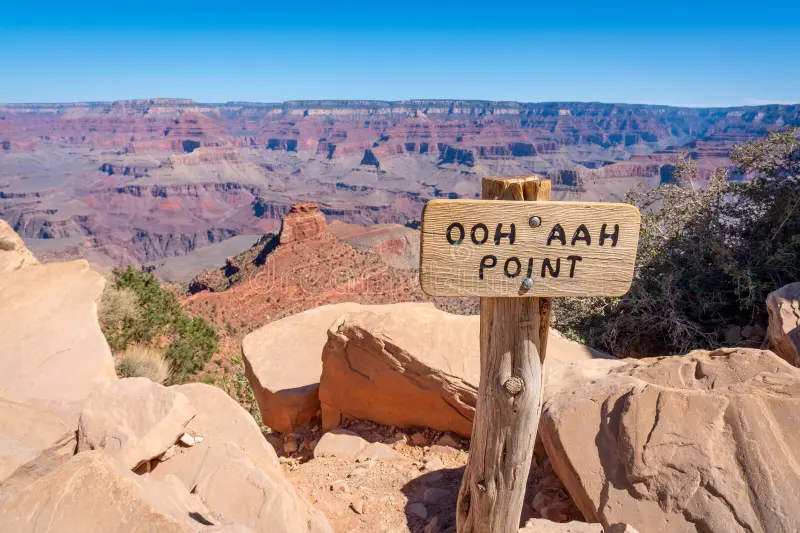
Following a prominent ridge line, this steep trail features panoramic views of the inner canyon and canyon walls. With no shade or water, it is best suited for morning hiking.
Reach Ooh Aah Point early for the sunrise over the canyon.
North Kaibab Trail
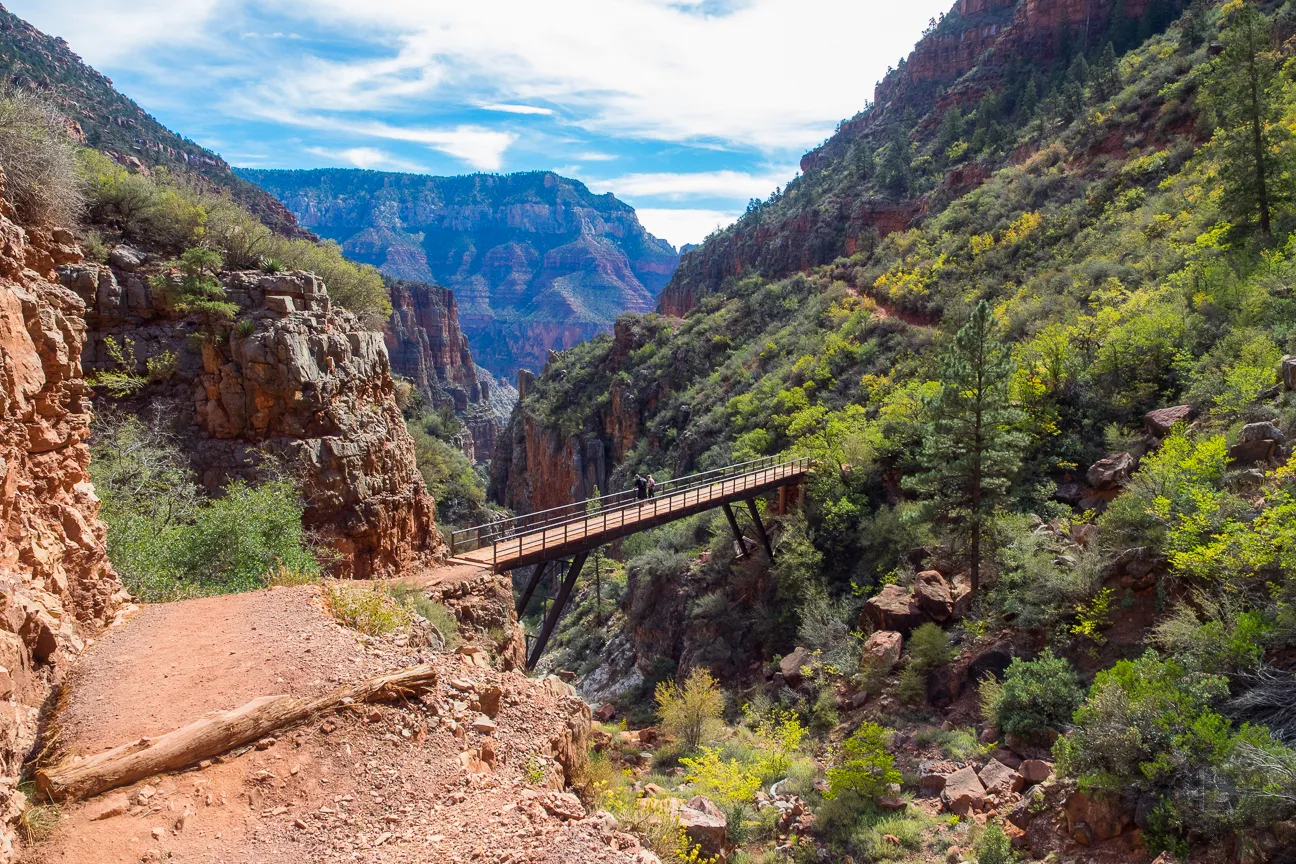
The only maintained trail descending from the North Rim, it leads hikers through diverse ecosystems from mixed conifer forests to desert canyon floors. It offers a wilder, more remote alternative to South Rim trails.
Look across Bright Angel Canyon to see the Roaring Springs waterfall.
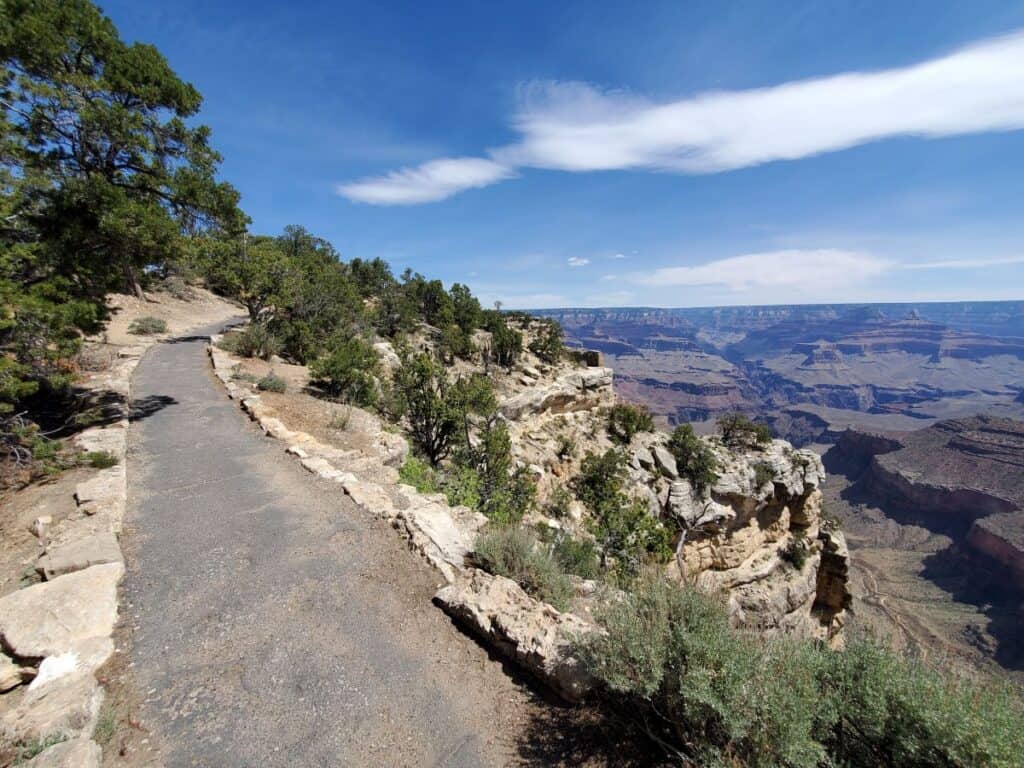
Rim Trail
This mostly paved path stretches along the edge of the South Rim from South Kaibab Trailhead to Hermits Rest. It features numerous scenic overlooks and historical landmarks without requiring a steep descent.
Walk the section near Yavapai Point at dusk to avoid crowds.
Reaching the South Rim: Shuttle Systems for Grand Canyon Hikers
Located at the South Rim, Grand Canyon Village, AZ 86023, the main parking areas serve as the primary logistics hub for hikers. The park features an extensive network of free shuttle buses that provide direct access to key trailheads, bypassing the need to drive private vehicles.
Hikers' Express Bus to South Kaibab Trailhead
Kaibab Rim Route (Orange Line) to Yaki Point
Village Route (Blue Line) to Backcountry Information Center
Hermits Rest Route (Red Line) to Hermits Rest
Tusayan Route (Purple Line) to Grand Canyon Visitor Center
Grand Canyon Hiking Trip Planner: Permits and Park Entrance Fees
Grand Canyon National Park entry prices depend on residency status and vehicle type, while overnight wilderness hiking requires separate backcountry permit fees secured through an official reservation lottery.
A typical nonresident adult hiker pays 120 USD for standard pedestrian entrance, with additional costs determined by the number of nights spent below or above the canyon rim.
Grand Canyon Hiking Trip Planner: Critical Safety Mistakes to Avoid
Most Grand Canyon emergencies come from misjudging the terrain, not from bad luck. The canyon reverses normal hiking logic: the descent is easy and the return climb is where people get into trouble.
Plan the ascent to take twice as long as the descent, and turn around when you have used one-third of your energy, not half.
Hiking through peak midday heat
Start early, arriving 06:00–09:00 to avoid extreme midday heat, and stay off exposed trails between 10:00 and 16:00 in warm months.
Not carrying or drinking enough water
Drink steadily throughout the hike rather than waiting until thirsty, and pair water with salty food to replace electrolytes.
Treating the rim-to-river hike as a day trip
Do not attempt to reach the Colorado River and return in a single day; budget your time by daylight and physical limits.
Ignoring early signs of heat illness
Stop, rest in shade, and cool down at the first sign of dizziness, nausea, or headache; call +1-928-638-7888 if symptoms worsen.
Hiking alone without sharing your plan
Check availability
Grand Canyon Hiking Trip Planner FAQ
Everything you need to know about grand canyon hiking trip planner