

Quick answer
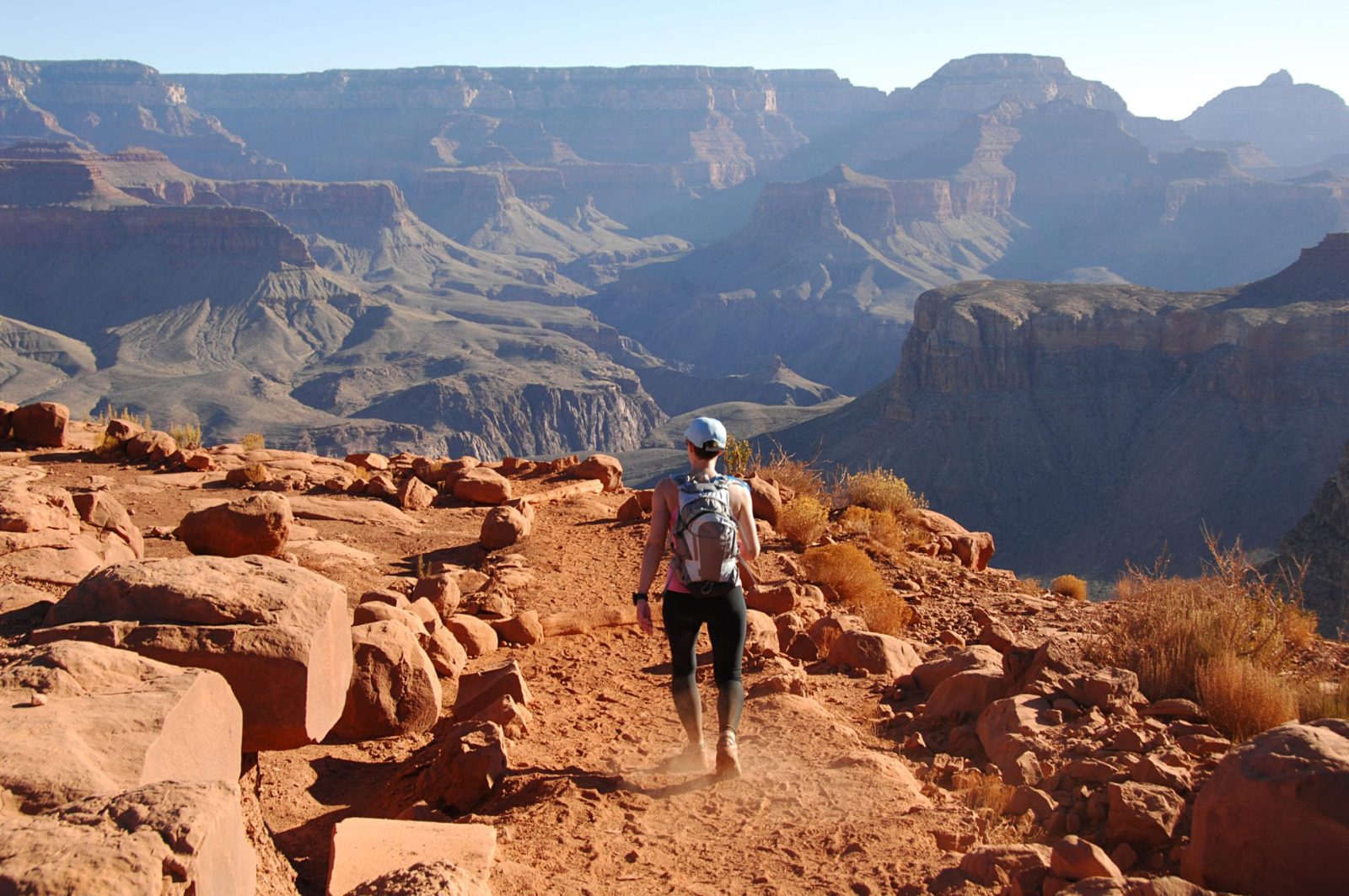
Dress in loose, light-colored, moisture-wicking layers, add a sun hat and UV-blocking long sleeves, and carry an insulating layer for cold rims. The Grand Canyon spans desert floor and 2,100-metre rims, so temperatures swing sharply. Enter within the 06:00–09:00 arrival window on your 120 USD, seven-day pass to hike before midday heat peaks.
The temperature at the Colorado River, deep in the Inner Gorge, can run more than 20 degrees hotter than the air on the South Rim above it. That single gap explains why what to wear hiking in grand canyon confuses so many first-time visitors: a comfortable morning at Grand Canyon Village can become a furnace by the time a hiker reaches the canyon floor. The park sits in high desert, and its trails descend rather than climb, so the hottest, most exposed ground waits at the turnaround, not the start. Elevation drives everything. The South Rim stands near 2,100 metres, where mornings feel cool and shade is easy to find. Descend the Bright Angel Trail or any of the corridor routes and the shade thins, the switchbacks bake, and the risk shifts from cold to dehydration within a couple of hours. Dressing for a Grand Canyon hike is therefore an exercise in planning for two climates at once, not one. The reader who understands this reads the forecast for the rim and the river separately, then dresses for the harder of the two. This is also why timing matters as much as fabric. The park stays open around the clock, every day of the year, but the practical hiking day is short: the recommended arrival window runs 06:00–09:00, which lets hikers move through the exposed upper switchbacks before the sun clears the canyon walls. A 120 USD entrance pass covers seven days, so there is no reason to rush a single visit or push into the midday heat to save time. Grand Canyon trail clothing works best when it is treated as a system rather than a costume — breathable, sun-blocking, and adjustable as conditions change between the rim and the Tonto Platform below. The detailed lists, the season-by-season timing, and the footwear questions each have their own place on this site, and the booking pages connect visitors to guided routes matched to their fitness and experience. Read those alongside this overview. Handled with a little forethought, what to wear hiking in grand canyon stops being a guessing game and becomes the most controllable part of the trip.
“In the Grand Canyon the hottest, most exposed ground waits at the turnaround, so hikers dress for the canyon floor, not the rim they start from.”
What to Wear Hiking in Grand Canyon: The Essential Clothing Checklist
Build your hiking outfit in layers, ordered from what to buy weeks ahead to what you pull on at the trailhead.
-
Pack moisture-wicking base shirts — Synthetic or merino tops pull sweat off your skin so you stay cool and dry on exposed climbs.
-
Choose zip-off convertible pants — Long legs shield you from sun and brush, then unzip to shorts as the canyon heats up.
-
Add a light insulating layer — Rim mornings and shaded inner-canyon stretches run cool, so a packable fleece or pullover covers the swing.
-
Bring a wide-brim sun hat — Full-brim coverage protects your face, ears, and neck through hours of open trail.
-
Wear moisture-wicking socks — Synthetic or wool socks manage sweat and cut friction over long descents.
-
Carry lightweight rain shell — A packable windproof shell handles sudden gusts and passing storms without adding bulk.
-
Dress before the 06:00–09:00 window — Have layers on and sun gear ready so you hit the trail during the cooler early hours.
How Weather and Season Dictate What to Wear Hiking in Grand Canyon
The optimal window to begin a hike is between 06:00 and 09:00 to beat the intense midday heat and avoid peak parking and trail congestion. During April and October, the temperature transition between the 7,000-foot rim and the Colorado River is most predictable, helping hikers dress appropriately.
Spring (March to May)
Moderate trail traffic34°F to 82°F across elevations
Hikers encounter cool rim conditions but rapid warming as they descend, requiring easily shed layers. Start early to adapt as temperatures increase towards the canyon floor.
Summer (June to August)
High rim parking congestion50°F to 105°F canyon highs
Scorching inner canyon heat necessitates lightweight, light-colored UPF sun shirts. Hikers must start by 06:00 to finish the climb before peak afternoon temperatures.
Fall (September to November)
Moderate trail traffic36°F to 95°F average range
Cool rim air quickly shifts to warm desert heat as you descend toward Phantom Ranch. Bring windbreakers and base layers that pack away easily as you descend.
Winter (December to February)
Low trail traffic20°F to 58°F rim to river
Snow on the South Rim requires insulated jackets and spikes for boots. The lower canyon remains milder but demands windproof outer layers.
Verdict: Tuesday to Thursday, arriving between 06:00 and 09:00 in April or October when the temperature difference between the rim and river is most manageable.
Trail Runners vs. Boots: What to Wear Hiking in Grand Canyon
When preparing for a Grand Canyon hike, choosing between lightweight agility and rugged foot protection determines your comfort on the steep, rocky descents. Hikers must weigh the benefits of nimble trail runners against the stability of traditional hiking boots.
|
Top pick Trail Runners Lightweight & Breathable |
Hiking Boots Sturdy & Protective | |
|---|---|---|
| Weight | 18 to 24 ounces (510 to 680 grams) per pair | 32 to 56 ounces (900 to 1600 grams) per pair |
| Ankle Support | Low-cut profile with minimal lateral ankle stabilization | Mid-to-high collar providing structural ankle stabilization |
| Breathability | High airflow through engineered mesh panels | Low airflow due to thick leather and waterproof membranes |
| Drying Speed | Dries within 2 to 4 hours in dry desert conditions | Requires 12 to 24 hours to dry completely |
| Best For | Day hikes on well-maintained corridor paths like Bright Angel Trail | Multi-day backpacking trips carrying packs over 30 pounds |
Verdict: Choose trail runners for fast-paced day hikes on dry corridor trails where ventilation and low weight prevent fatigue, or select hiking boots if carrying heavy loads on unmaintained backcountry routes.
Insider Accessories and Gear Tips for Grand Canyon Trails
Properly selected accessories protect you from the intense desert environment and prevent physical fatigue on deep canyon trails.
Choose Hats with Under-Chin Straps
Canyon winds along the rim can easily blow hats into the abyss. Select a wide-brimmed hat featuring a toggle chin strap to secure it during sudden gusts.
Prioritize Polarized Category 3 Lenses
The intense desert sun reflects heavily off the canyon's lighter limestone layers. Wear polarized category 3 sunglasses to reduce glare and protect your eyes from high UV exposure.
Dampen Gaiters for Evaporative Cooling
Dip your microfiber neck gaiter in water at trail corridor rest houses to cool your neck. In dry sections, pull it up to block the fine, red dust kicked up by mule trains.
Pack Spare Merino Wool Socks
Sweat-soaked fabric increases friction and causes rapid blistering on the steep ascent. Swap to a fresh, dry pair of merino wool socks at the halfway point.
Use Thin Toe Sock Liners
Wearing a thin, synthetic toe-liner sock under your primary wool pair reduces skin-on-skin friction. This prevents blisters between toes during the continuous downhill descent.
Add Lightweight Trail Ankle Gaiters
Low-profile spandex ankle gaiters attach directly to trail shoes to keep grit out. This prevents fine sand from infiltrating your footwear and acting like sandpaper against your skin.
Dangerous Clothing Mistakes to Avoid on Grand Canyon Hikes
Clothing errors send more hikers into trouble on Grand Canyon trails than terrain does. These are the attire blunders that turn a manageable descent into a dangerous one.
Wearing cotton shirts, socks, or jeans on the trail
Cotton traps sweat, chills you at the rim, and chafes on the climb out. Choose synthetic or merino wool that wicks moisture and dries fast.
Hiking in brand-new, un-broken-in boots
Fresh boots guarantee blisters over a long descent. Wear and break in your footwear on shorter walks for several weeks before the trip.
Dressing only for canyon-floor heat
Rim temperatures run far cooler than the inner canyon, especially at the 06:00–09:00 start window. Pack a warm layer you can shed as you drop in.
Ignoring the first hot spot on your foot
A small rub becomes a trip-ending blister within miles. Stop the moment you feel it and cover the spot with tape or a blister patch.
Choosing dark, heavy clothing that absorbs heat
Dark fabric raises your body temperature under direct sun. Wear light-colored, loose, long-sleeved layers that reflect heat and cover skin.
Skipping a hat and any face or neck cover
Exposed skin burns quickly in open desert sun. Add a wide-brim hat and neck coverage before you leave the trailhead.
Check availability
FAQ: What to Wear Hiking in Grand Canyon
Everything you need to know about what to wear hiking in grand canyon