10 hr
Grand Canyon West Rim & Hoover Dam VIP Day Trip with Meals
- Private experience
- Personal attention
- Premium amenities
- Free cancellation
Grand Canyon Backpacking Tours — Rim-to-River Treks & Day Trips
Down through a billion years of stone, up into desert light
Compare fares, pick the fit — all bookings are mobile-voucher and eligible for free cancellation where shown.
10 hr
10 hr 30 min
4 hr
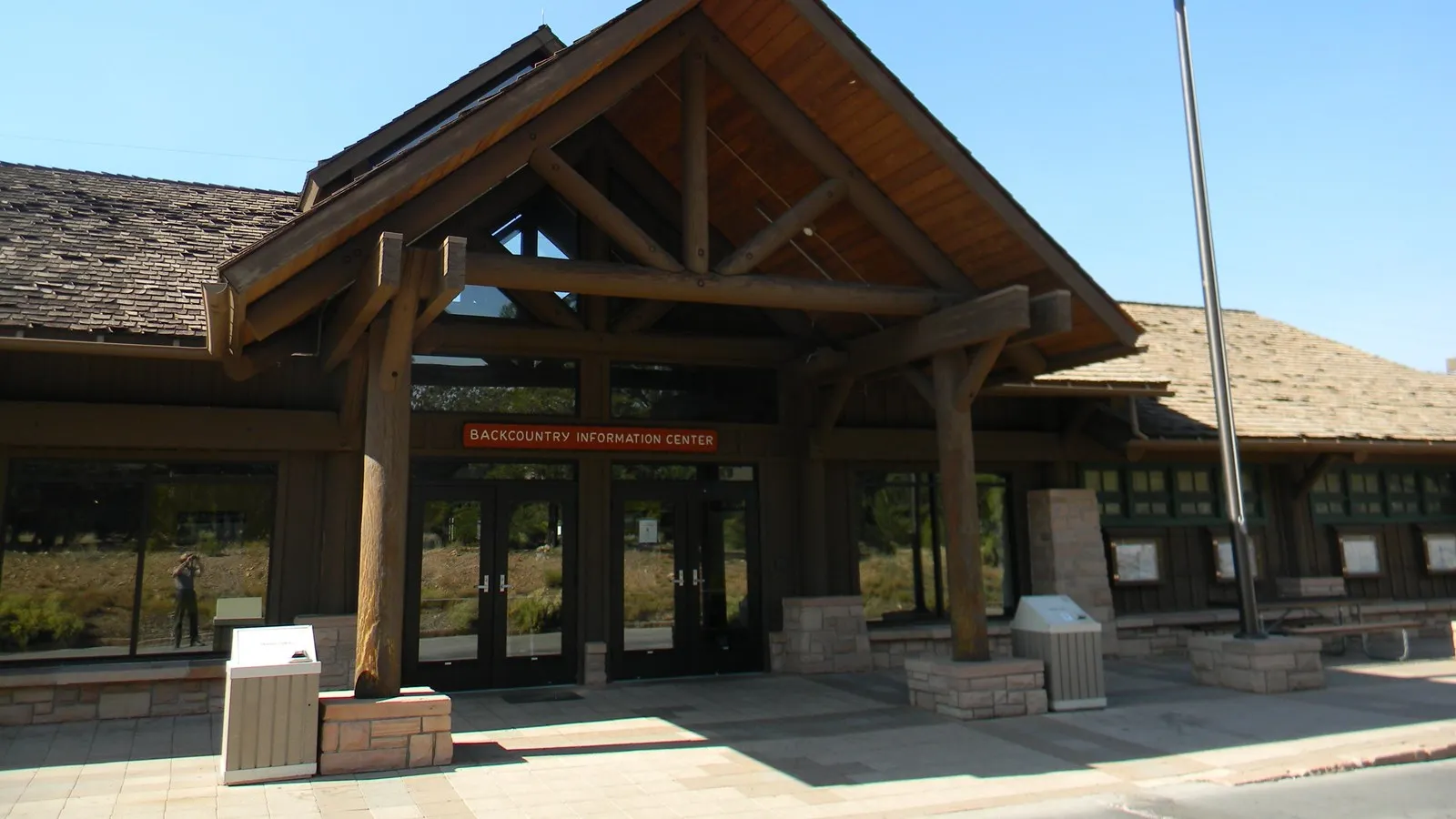
When planning grand canyon backpacking tours, choosing between maintained corridors and primitive zones will shape your entire wilderness journey. To secure permits, arrive between 06:00–09:00 at 1 Backcountry Road, Grand Canyon Village, AZ 86023, or buy grand canyon backpacking tours tickets online.
|
Top pick Corridor Zone Permit (Hiking) |
Wilderness Zone Permit (Hiking) | Field Institute Tour (Guided Hiking) | |
|---|---|---|---|
| Access Area | Bright Angel and North Kaibab trails | Primitive trails and remote wilderness zones | Pre-selected educational routes below rim |
| Safety Facilities | Ranger stations, emergency phones, drinking water | No treated water, self-reliance required | First aid kit and satellite phone included |
| Permit Process | Lottery application on Recreation.gov | Lottery application on Recreation.gov | Permits arranged by official partner |
| Cost | Permit fee plus nightly charge | Permit fee plus nightly charge | Varies by itinerary |
| Park Entrance Fee | 120 USD | 120 USD | 120 USD |
| Best For | First-time canyon backpackers | Experienced hikers seeking solitude | Hikers wanting expert educational guide |
| See tickets & prices |
Verdict: First-time visitors should opt for a Corridor Zone permit, while those seeking educational guidance should book a grand canyon backpacking tours tour, or sign up for grand canyon backpacking tours tours for a longer expedition.
Worth it for permit-anxious first-time trekkers
A guided grand canyon backpacking tours package costs real money upfront, so the honest question is what that fee buys beyond a booking confirmation. The value is risk removed: a secured permit from the Backcountry Information Center, high-end tents and packs you never have to own, catered trail meals, and a guide trained in emergency medical response deep below the rim. Independent hikers pay the 120 USD non-resident entry fee and still gamble on walk-in permits, while a booked guided rim-to-river trek locks in the slot. The live grid shows day-trip formats — West Rim and Hoover Dam runs, a South Rim helicopter flight, the Antelope Canyon and Horseshoe Bend loop — so weigh what each includes against hauling your own gear across exposed switchbacks near the Colorado River. For anyone new to desert heat and elevation, that safety margin earns the price. Fit hikers who already own kit get less return.
Bottom line: Book a grand canyon backpacking tours tours package when you want the permit and safety handled, and skip it if you are a seasoned desert hiker with your own kit.
Selecting guided Grand Canyon hikes is best for hassle-free permits, while going alone requires navigating the competitive NPS lottery. While you do not buy traditional grand canyon backpacking tours tickets, booking an outfitter handles all safety logistics.
|
Top pick Guided Tours |
Independent | |
|---|---|---|
| Permit Success Rate | Near-guaranteed (pre-arranged) | Low (~10% in peak lottery) |
| Gear Provided | All core camping gear included | None (bring your own) |
| Safety & Navigation Support | Certified guide with emergency satellite device | Self-navigated (no active support) |
| Pacing Flexibility | Fixed group schedule and itinerary | Fully customized by the hiker |
| Average Upfront Cost | 1,000–2,500 USD per person | 120 USD entrance + nightly permit fees |
| See tickets & prices |
Verdict: In the end, choosing professional grand canyon backpacking tours tours provides pre-secured permits along the Bright Angel Trail, whereas a DIY grand canyon backpacking tours tour offers maximum flexibility for experienced backpackers.
Hand-picked experiences loved by thousands of travelers
11 - 11.5 hours
Free Cancellation
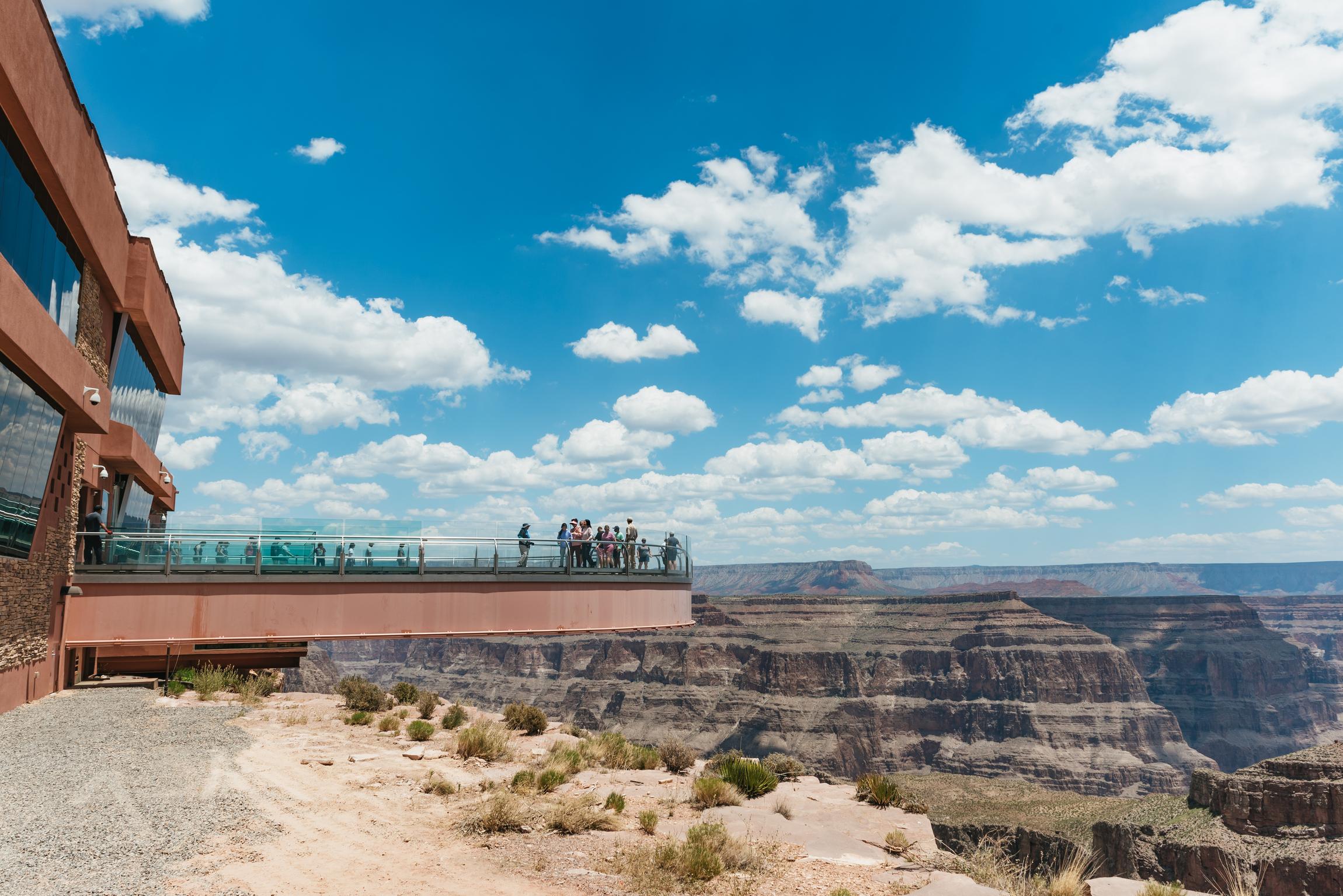
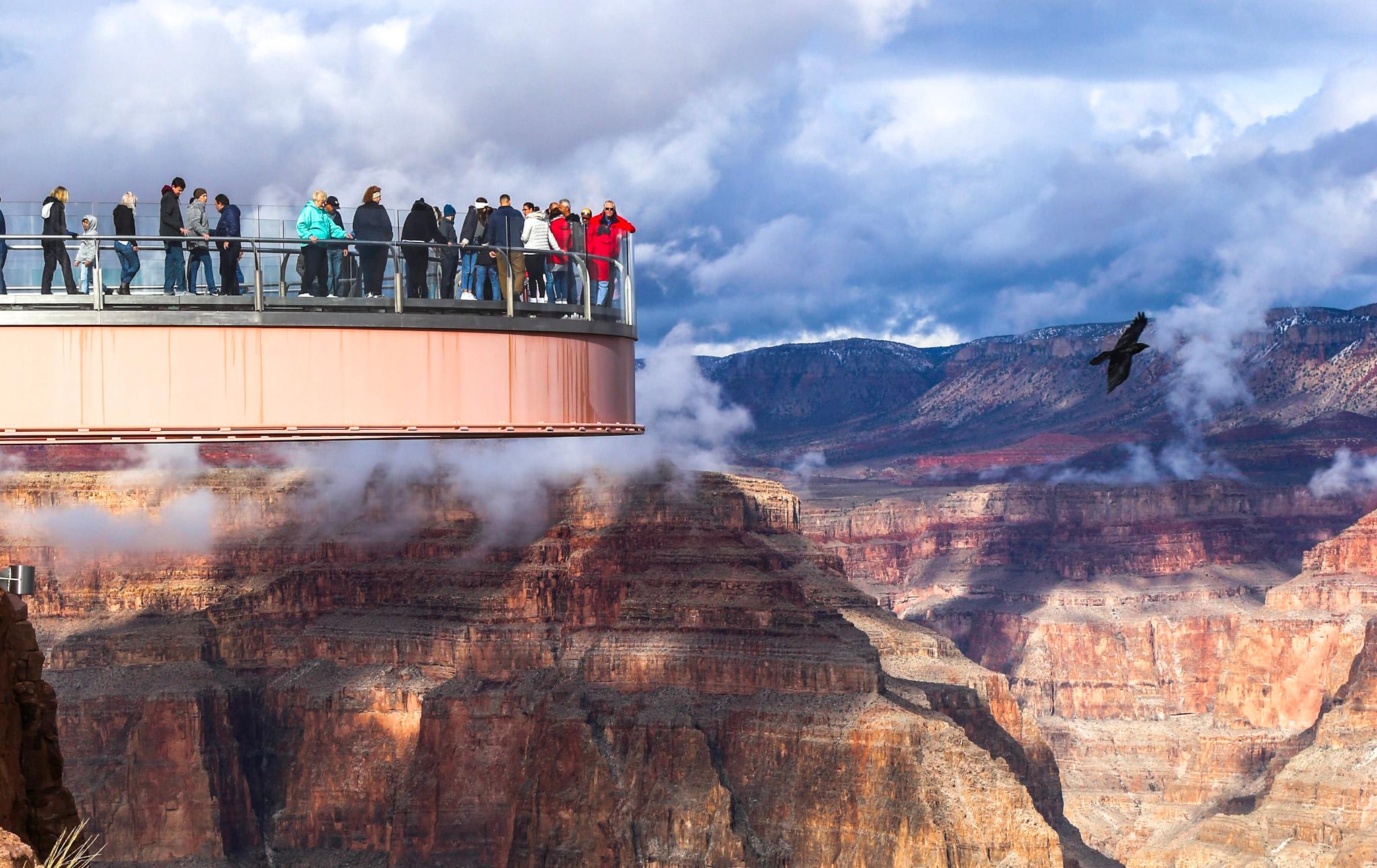
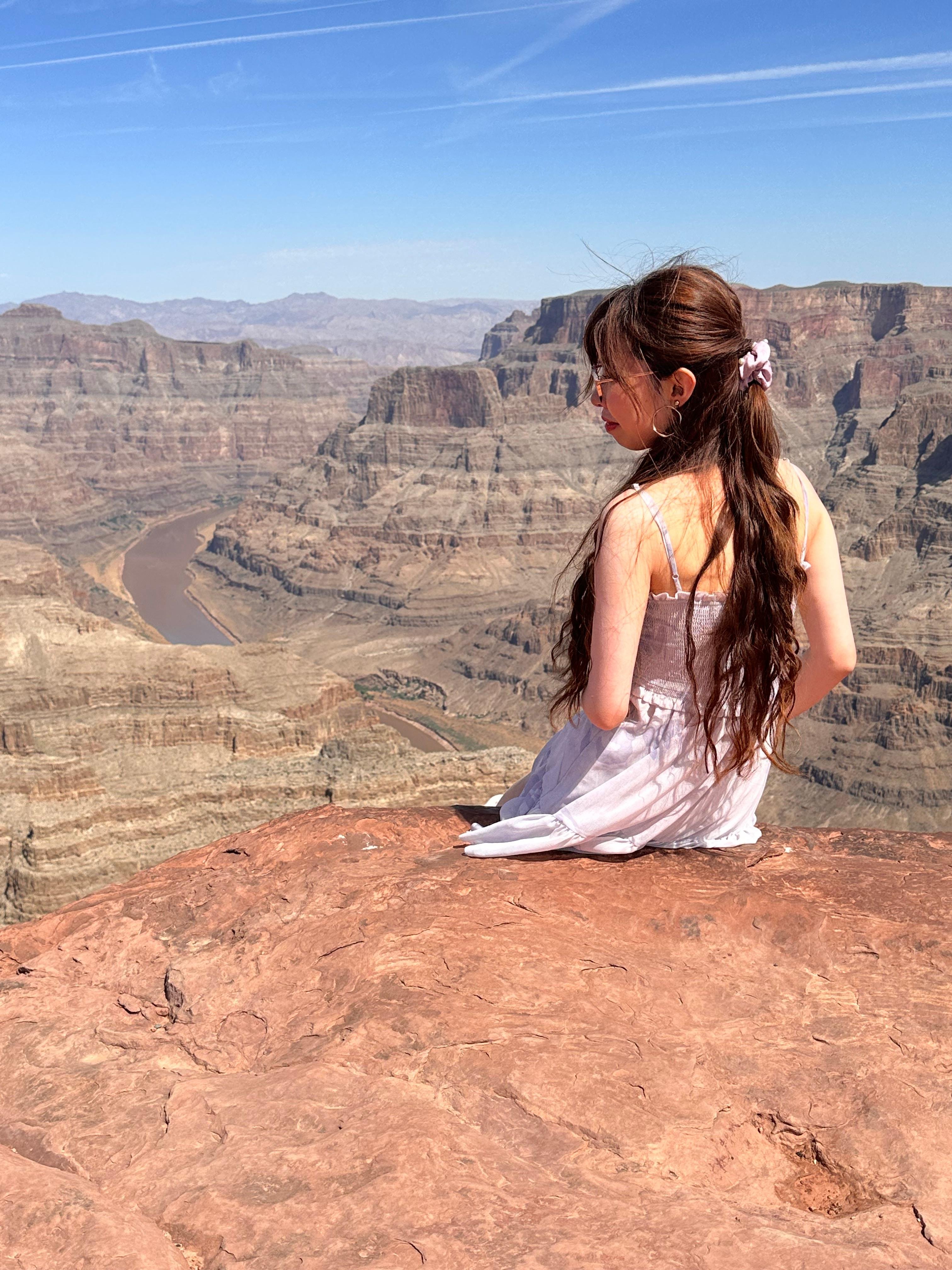
Travel from Las Vegas to the Grand Canyon West Rim, stop at the Hoover Dam, and experience scenic desert views.
17 hours
Free Cancellation
Escape the neon glow of Las Vegas to explore the Grand Canyon, Antelope Canyon, and Horseshoe Bend on an epic day trip.
4.5 hours
Free Cancellation
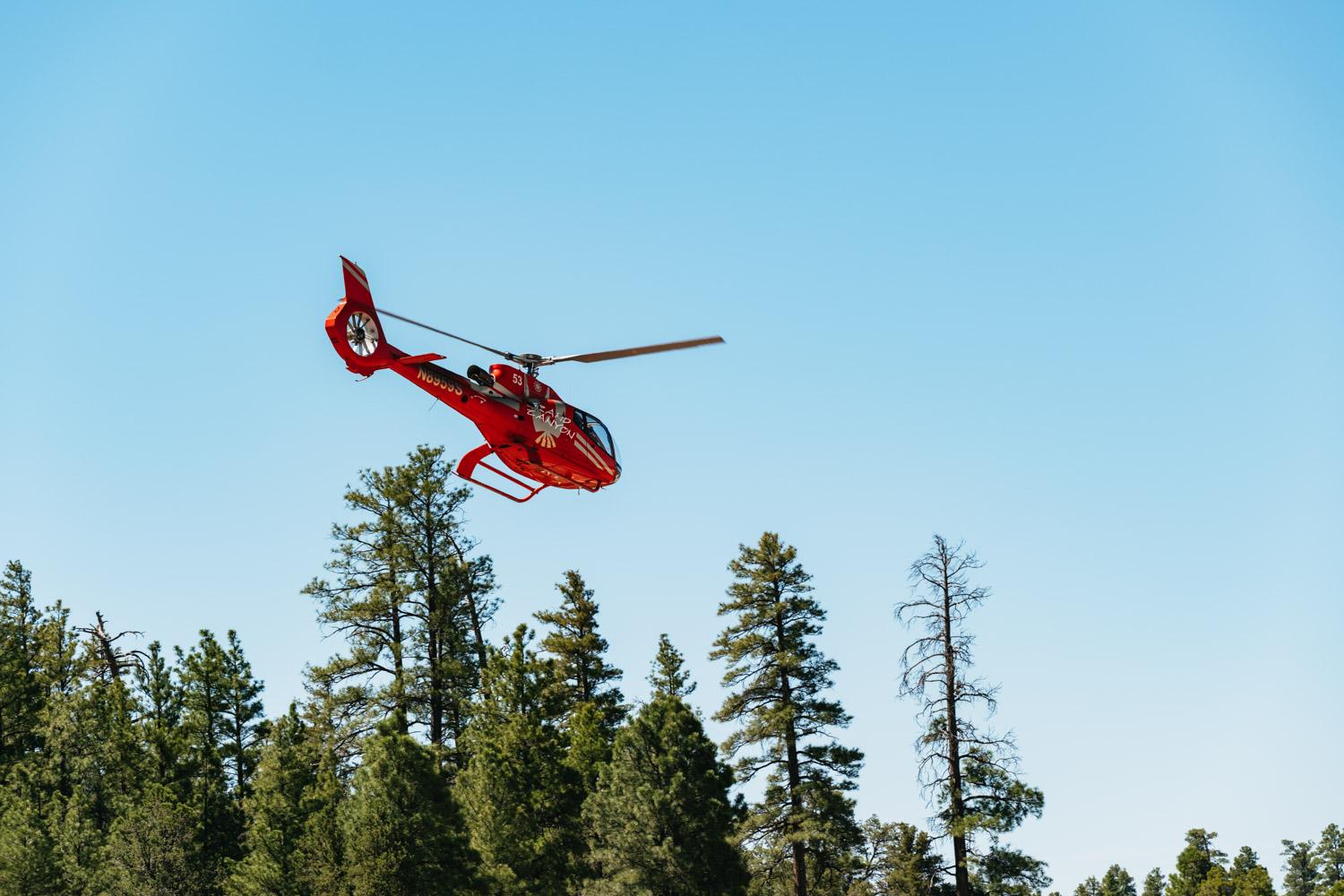
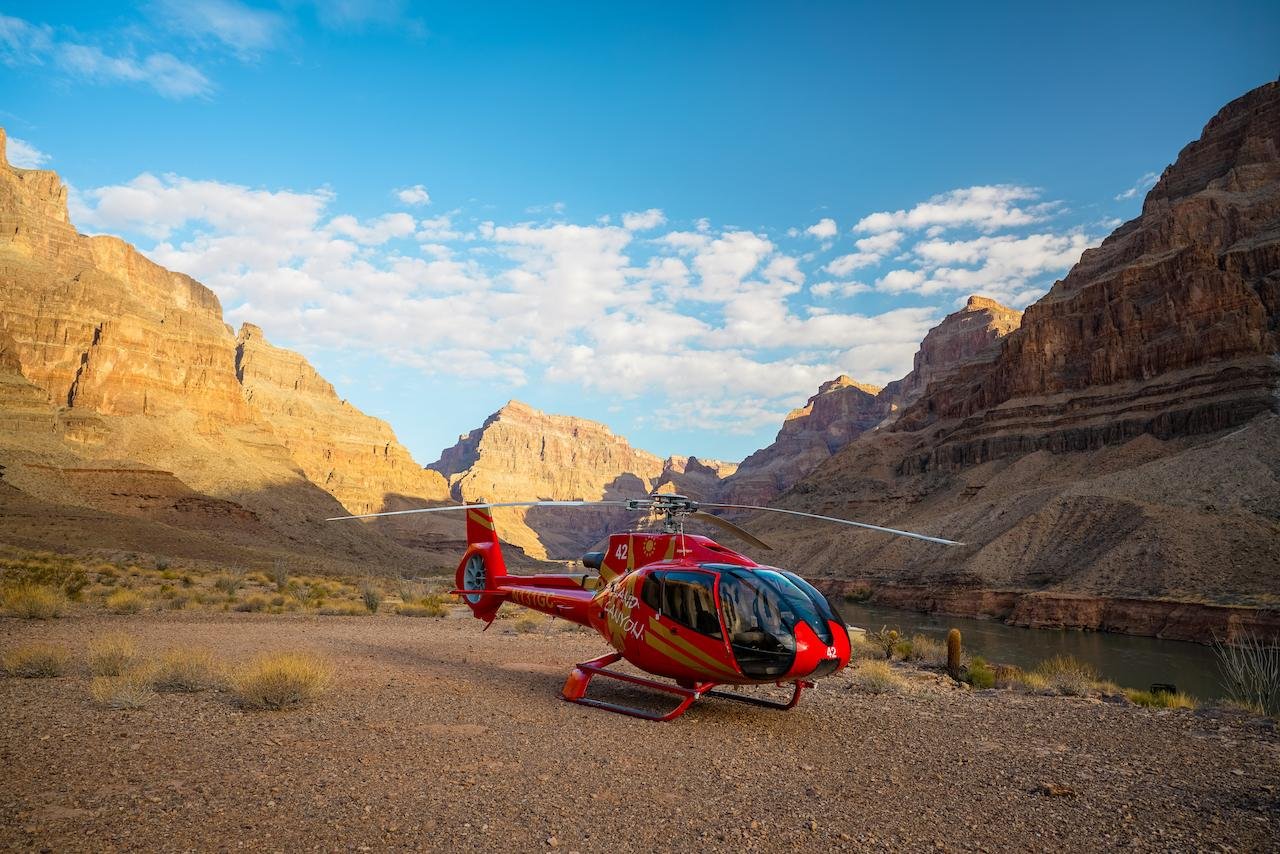
Fly over the Hoover Dam and land inside the Grand Canyon for a champagne toast on this premier helicopter flight.
14 hours
Free Cancellation
Full-day coach trip from Vegas to the Grand Canyon's South Rim, with lunch and onboard WiFi included.
12 hours
Free Cancellation
Discover the Hoover Dam and Grand Canyon West Rim on a fully guided, small-group day trip from Las Vegas.
5 days
Free Cancellation
Conquer the iconic Grand Canyon from rim to rim on a fully guided 5-day backcountry trekking adventure.
4 days
Free Cancellation
Trek the historic Hermit Trail and camp along the Colorado River on a fully-outfitted 4-day backcountry adventure.
6 hours
Free Cancellation
Explore the depths of the Grand Canyon on a private guided trek featuring dramatic views, top-tier gear, and fresh food.
Meet your wilderness guides to prepare gear for your Grand Canyon backpacking tours and perform safety checks.
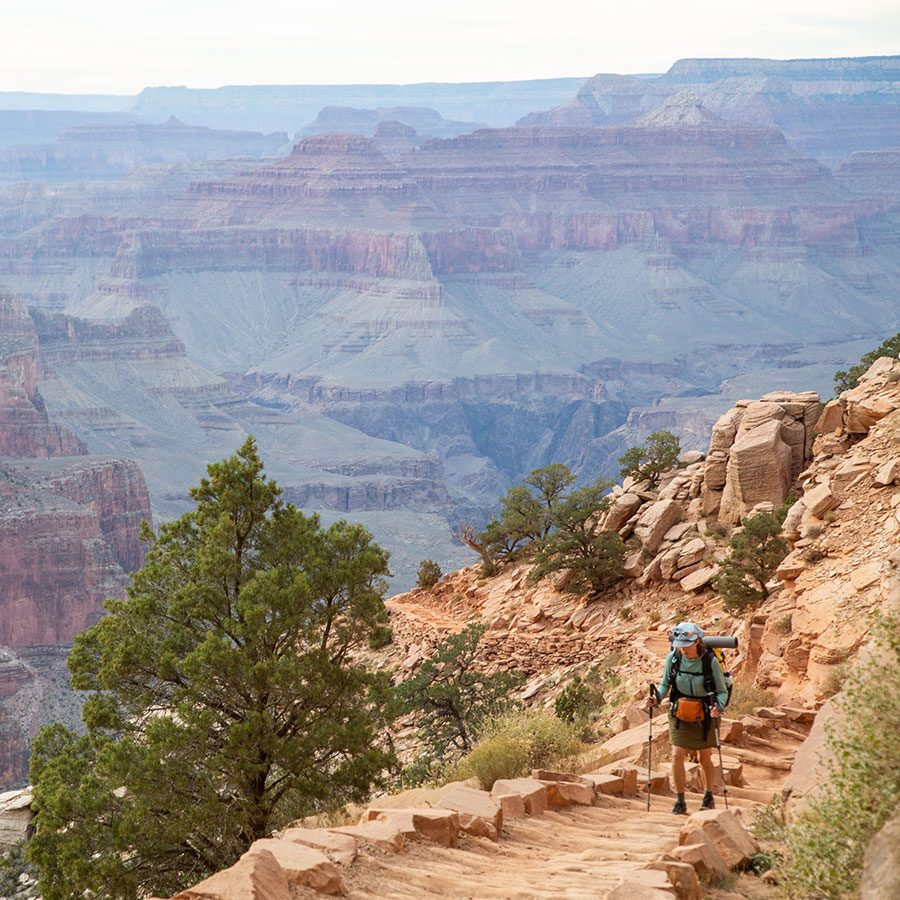
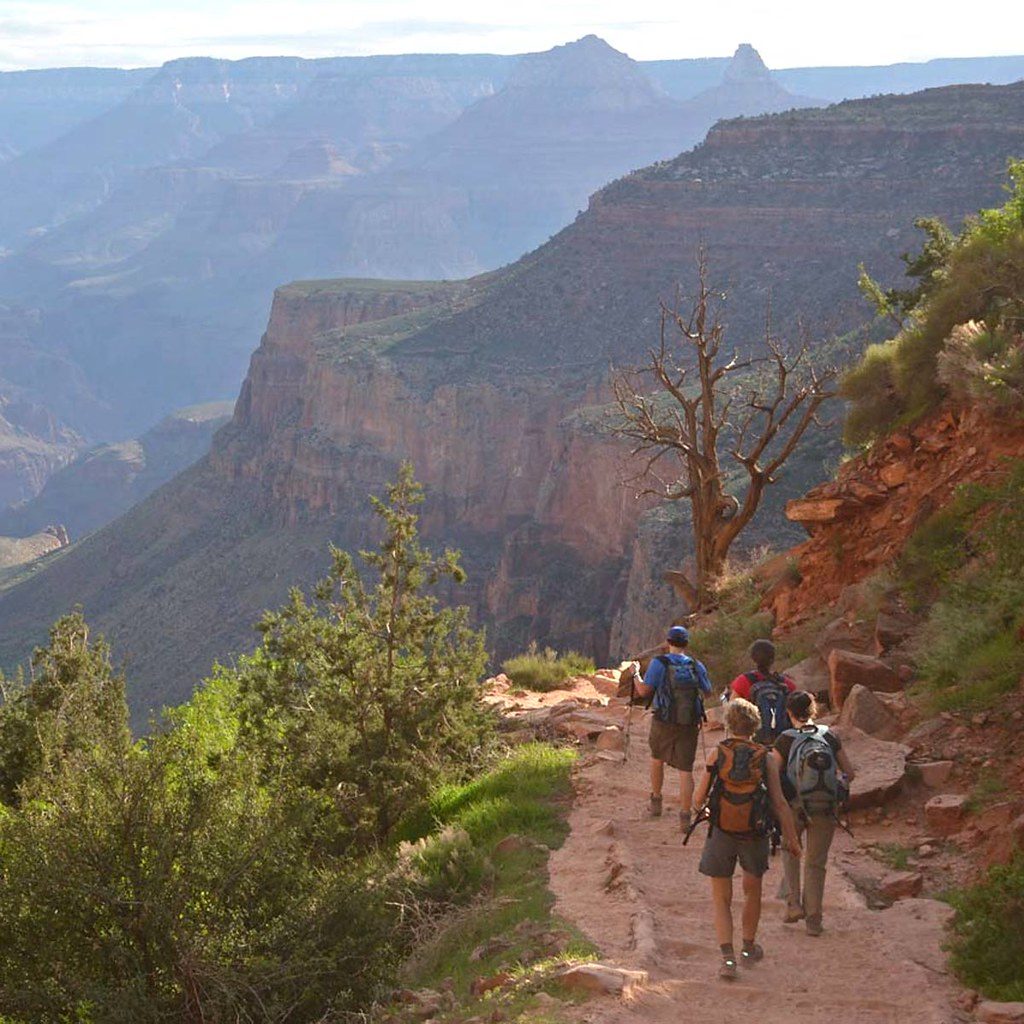
Begin your hike down the South Kaibab Trail, observing the dramatic rock layers and descending to the canyon floor.
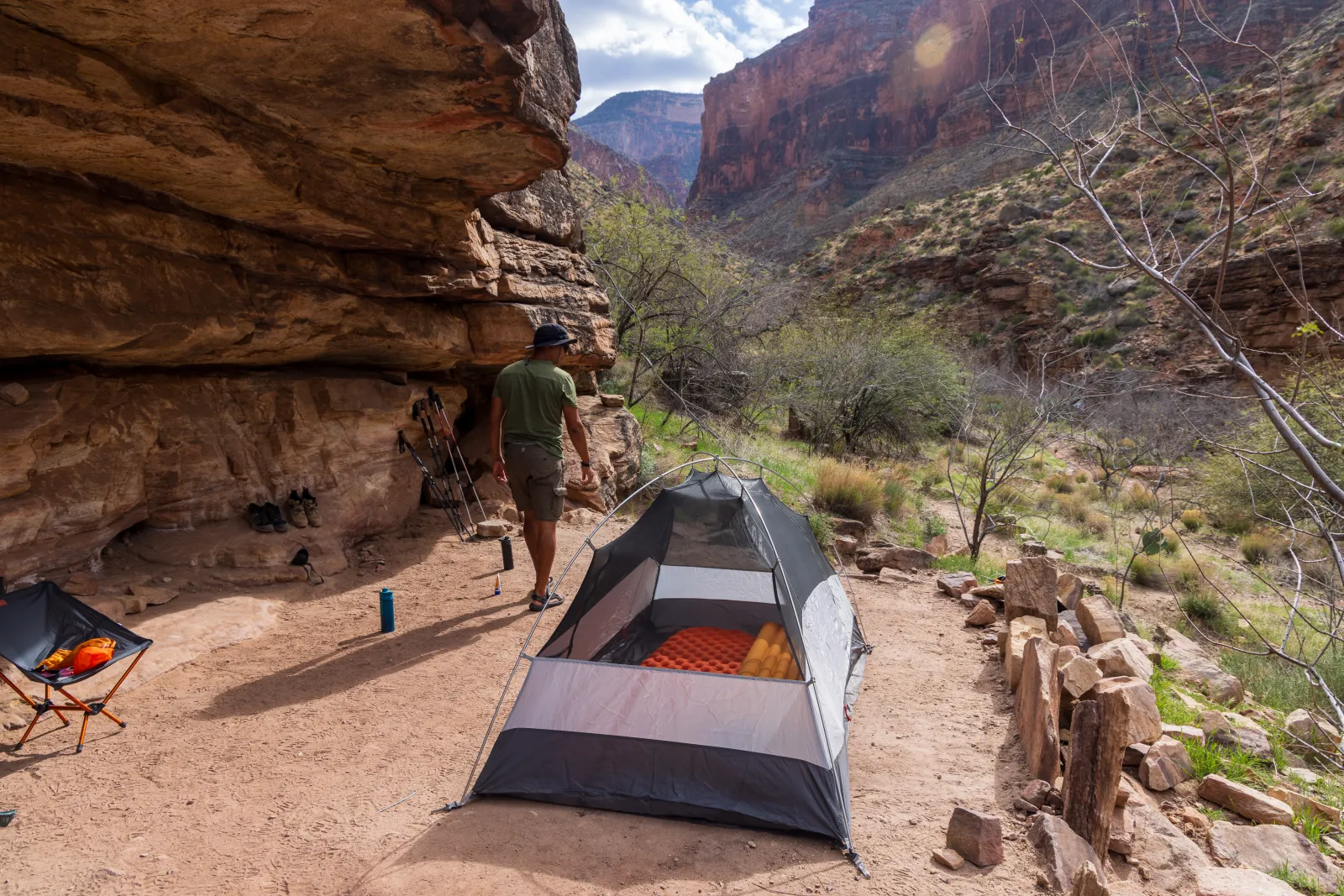
Arrive at Bright Angel Campground near Phantom Ranch to pitch tents and secure food in storage canisters.
Explore nearby Ribbon Falls or the Colorado River banks while learning about the regional geology.
Begin the strenuous climb up the Bright Angel Trail, utilizing rest stations and maintaining proper hydration.
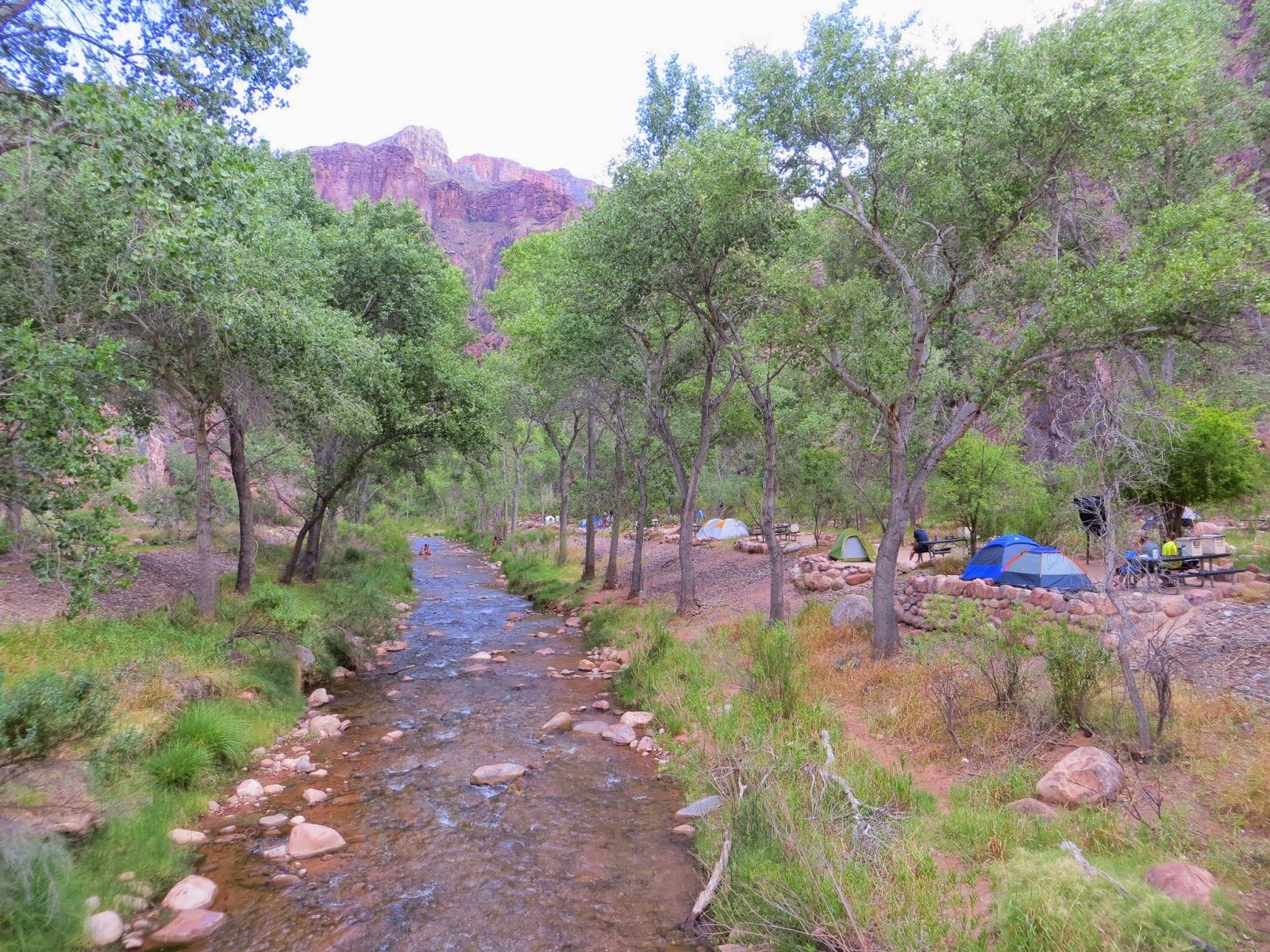
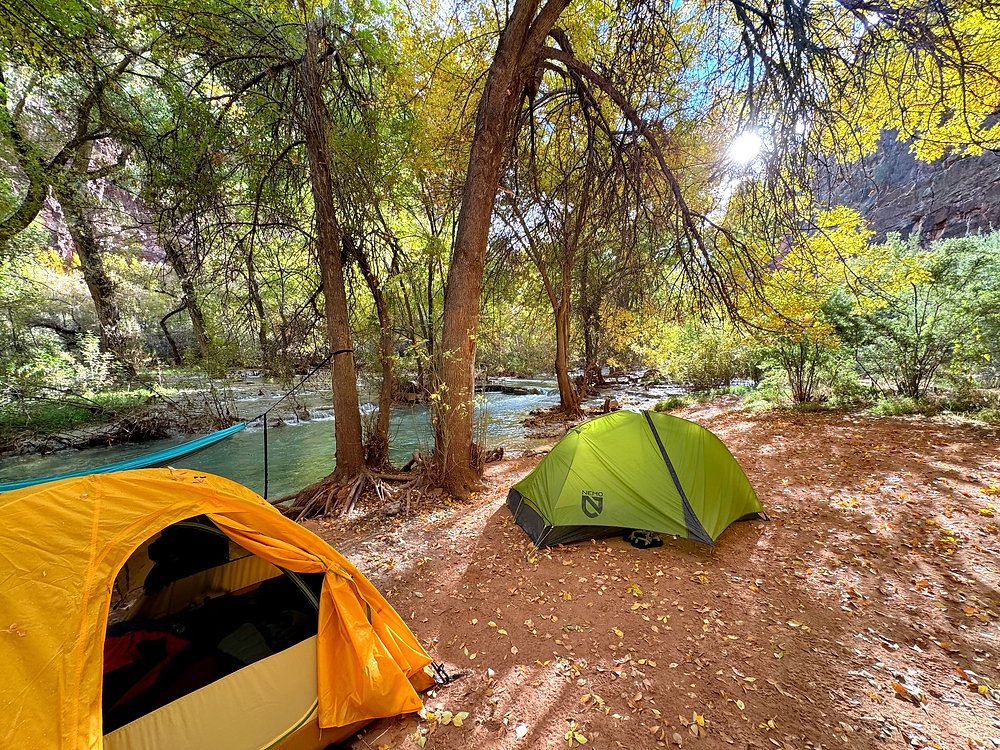
Bright Angel Campground lies 9.5 miles below the South Rim along Bright Angel Creek. It features 31 designated campsites equipped with metal food storage cans to protect against local wildlife. The area sits less than half a mile from the historic Phantom Ranch cabins.
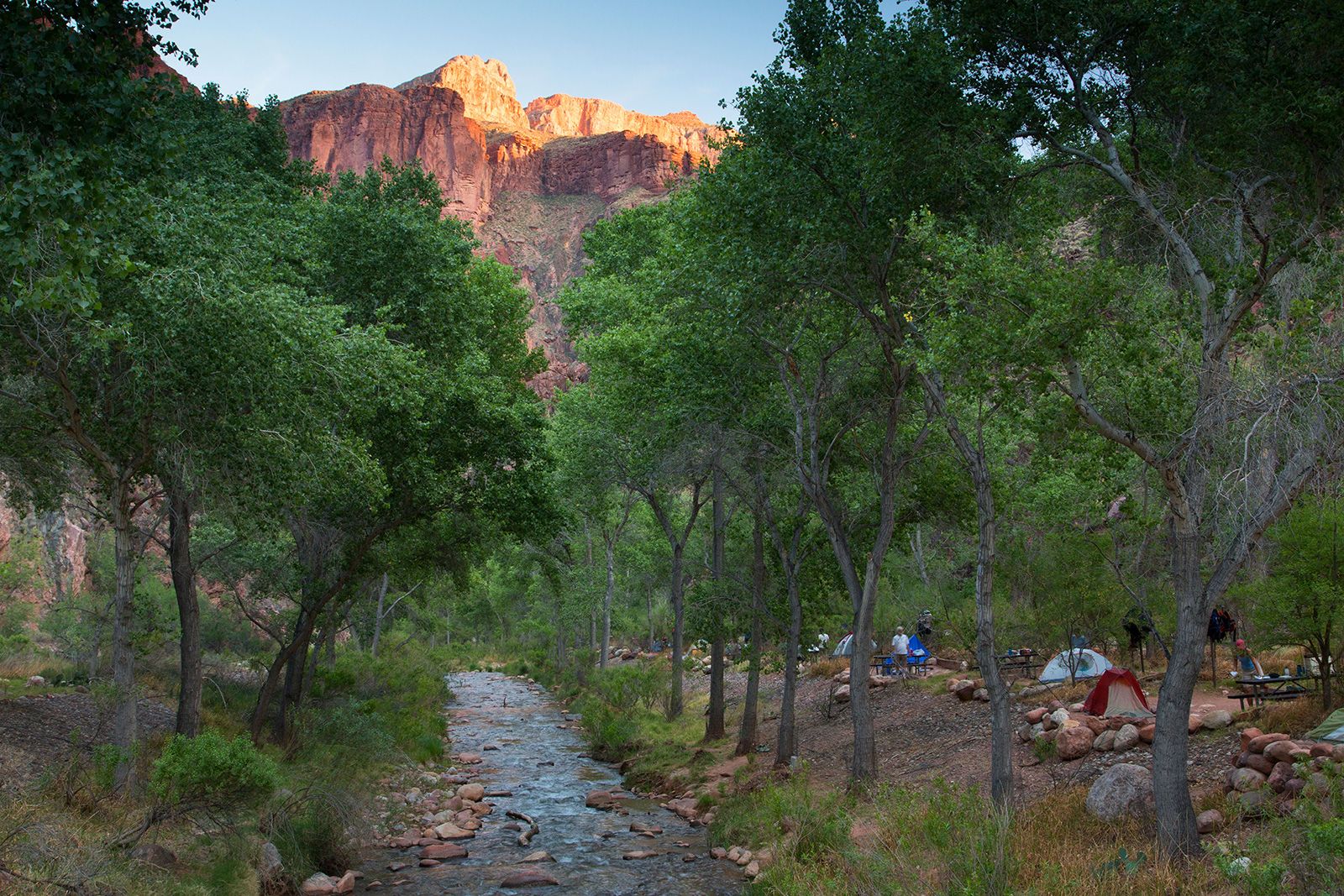
Formerly known as Indian Garden, Havasupai Gardens Campground is situated 4.8 miles below the South Rim. It is a lush riparian oasis shaded by massive cottonwood trees fed by a spring. Mule trains regularly stop here to rest before continuing to the canyon floor.
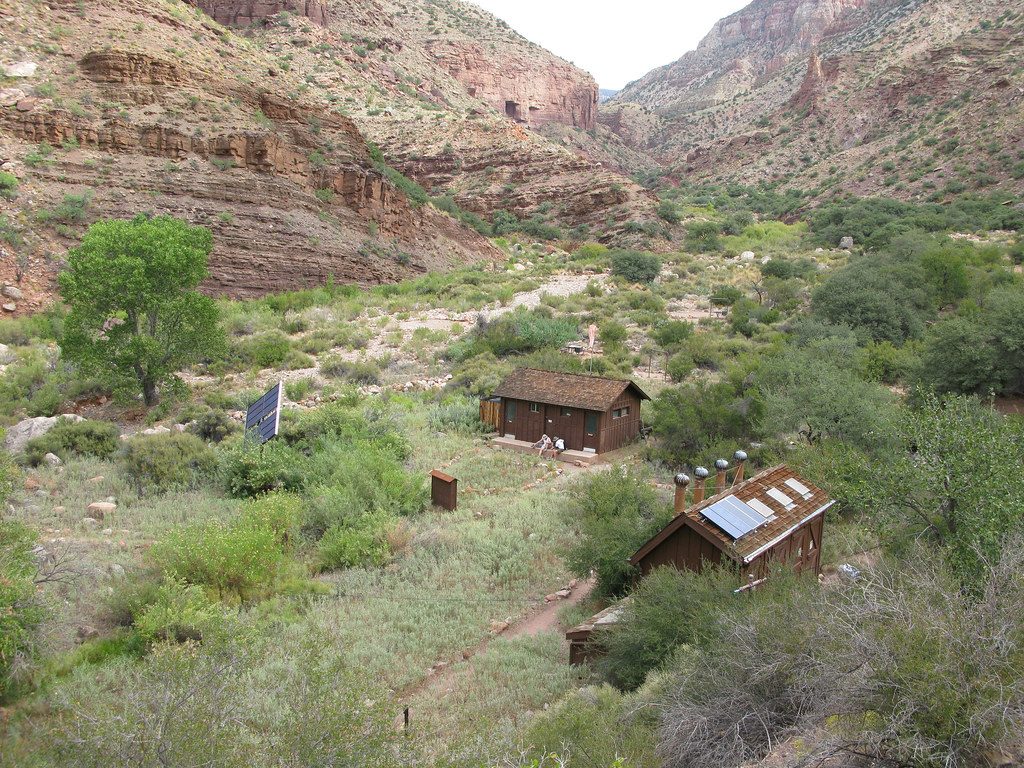
Cottonwood Campground is a secluded site located 6.8 miles below the North Rim along the North Kaibab Trail. It features 11 campsites and has potable water available seasonally from mid-May to mid-October. The nearby creek provides a refreshing pool for hikers to cool off.
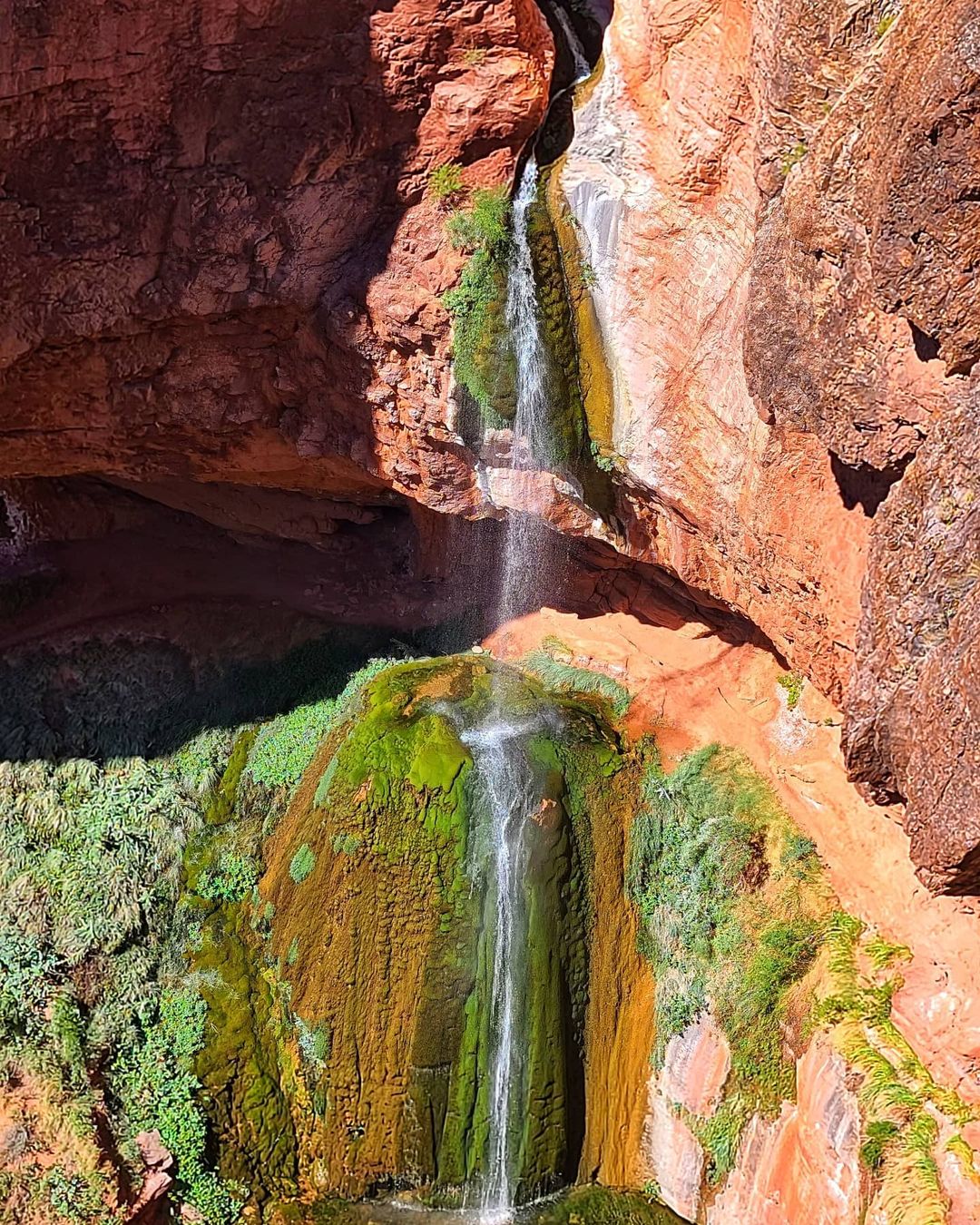
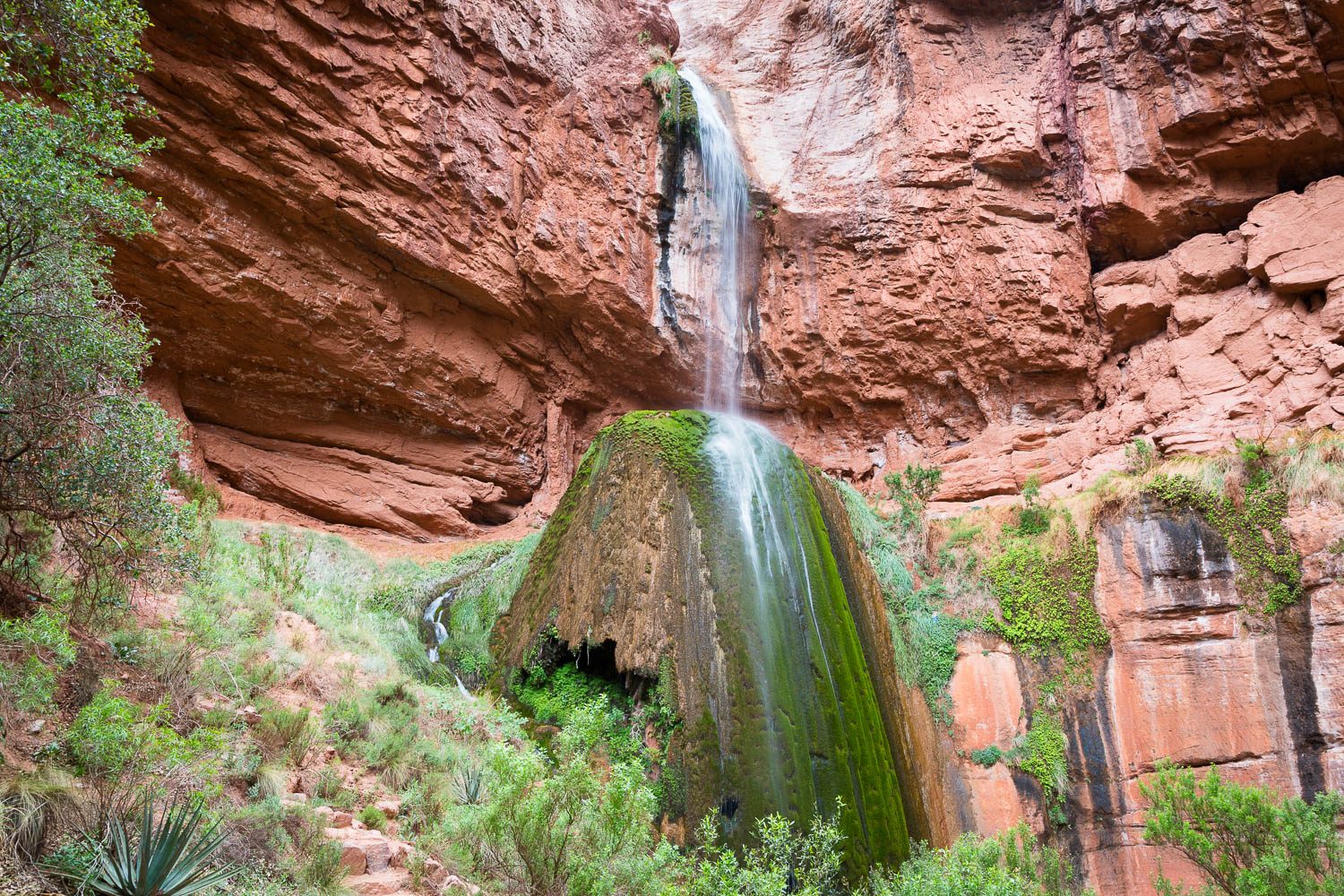
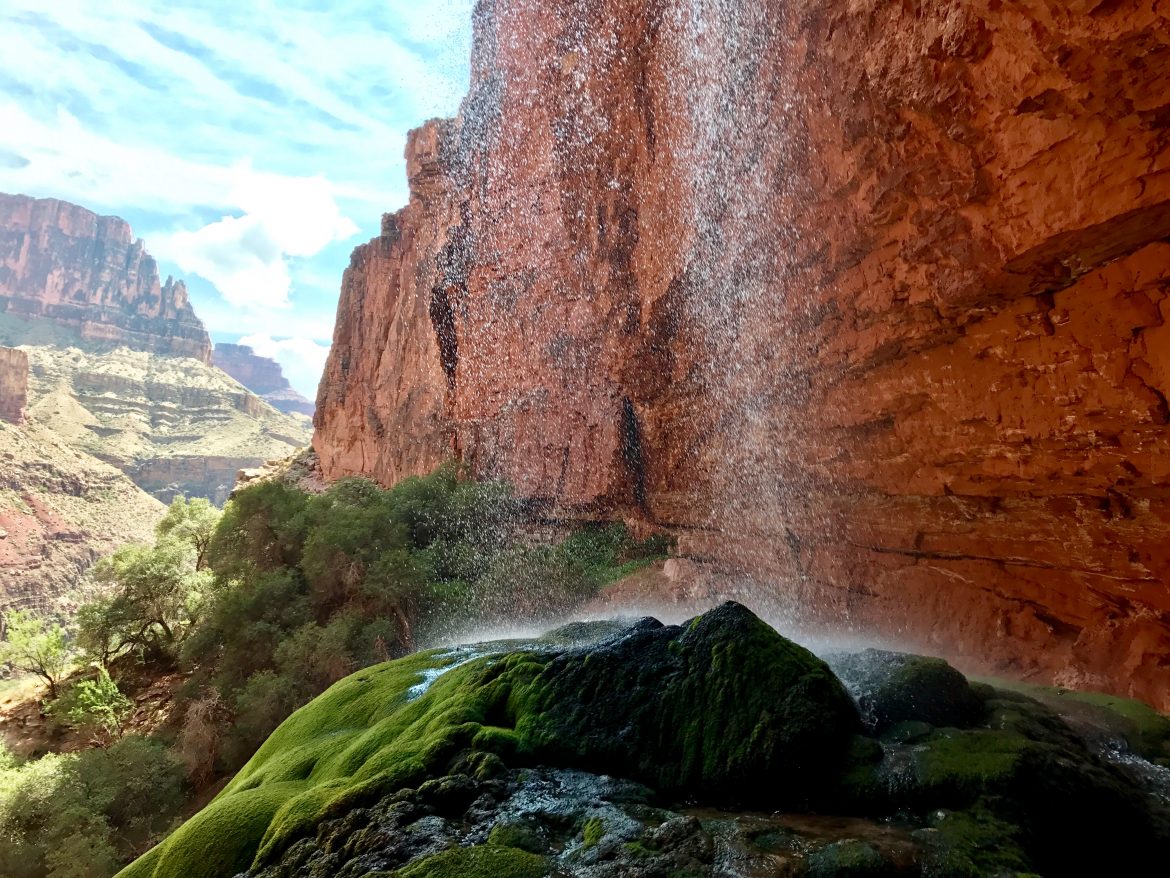
Ribbon Falls is a spectacular waterfall tucked into a side canyon along the North Kaibab Trail. The water falls 140 feet over a giant moss-covered travertine dome that has built up over thousands of years. A short bridge leads hikers to a mist-filled amphitheater behind the falls.
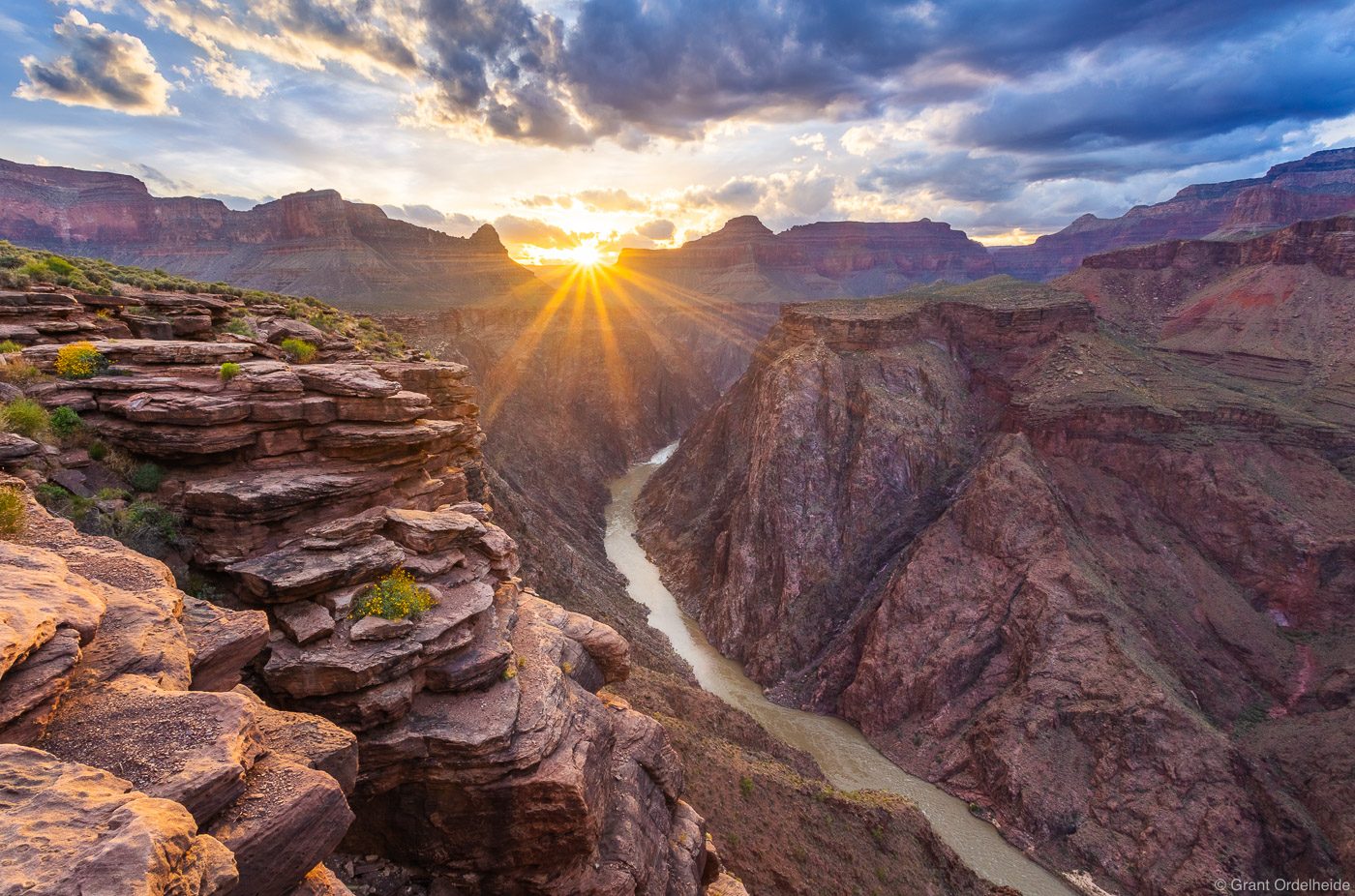
Plateau Point is a dramatic overlook located 1.5 miles from Havasupai Gardens. The point projects out over the inner gorge, offering a sheer 1,300-foot drop down to the rushing Colorado River. It provides some of the most expansive vistas of the river and the surrounding canyon walls.
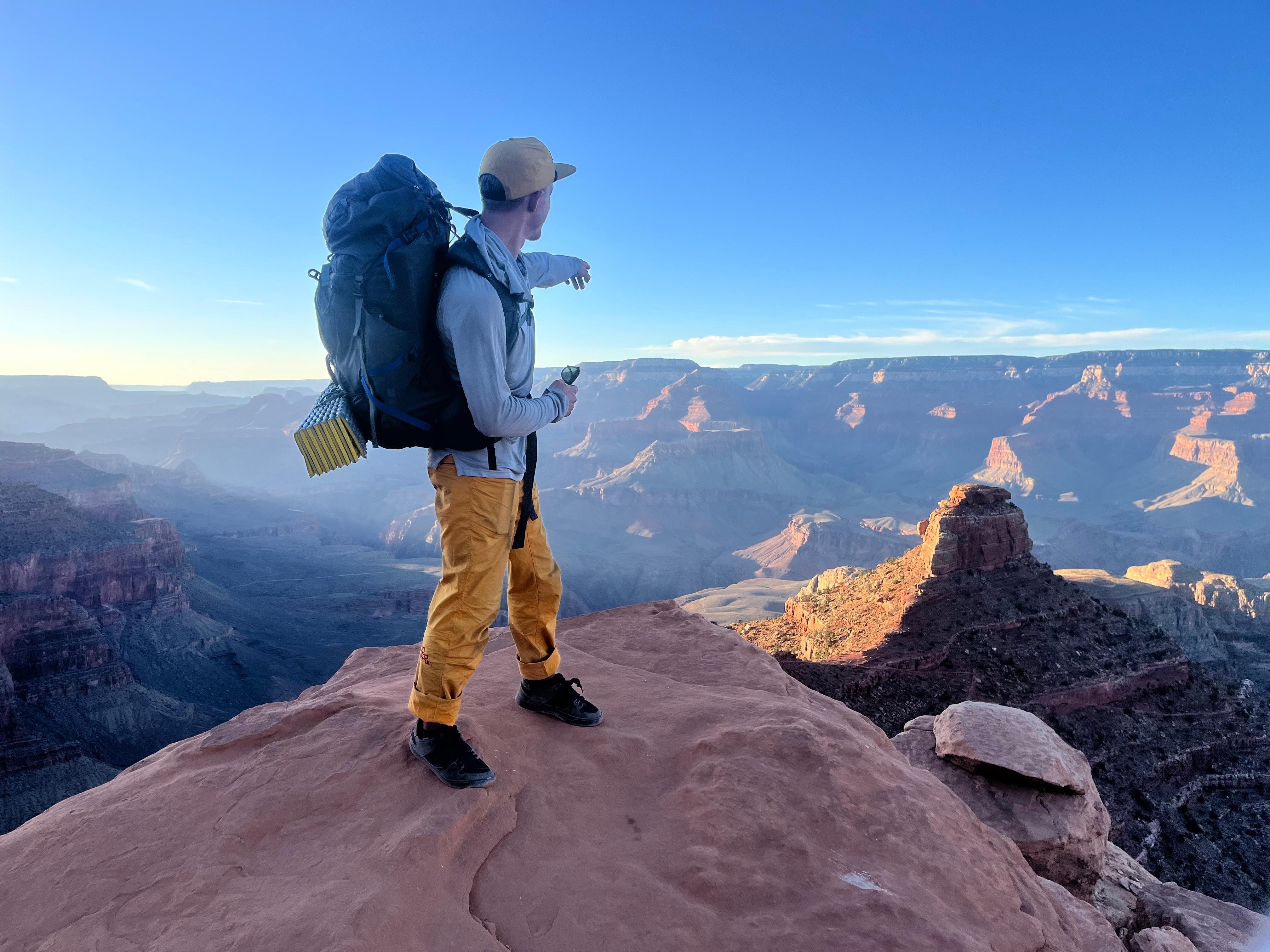
You shoulder the pack at the trailhead while the rim is still cool and blue, and the first steps drop steeply into shadow. Within the first mile the switchbacks fold beneath you, and the parking lots and railings vanish overhead.
You pass through a gate in the rock where the Kaibab limestone gives way to redder ground, and the air begins to warm.
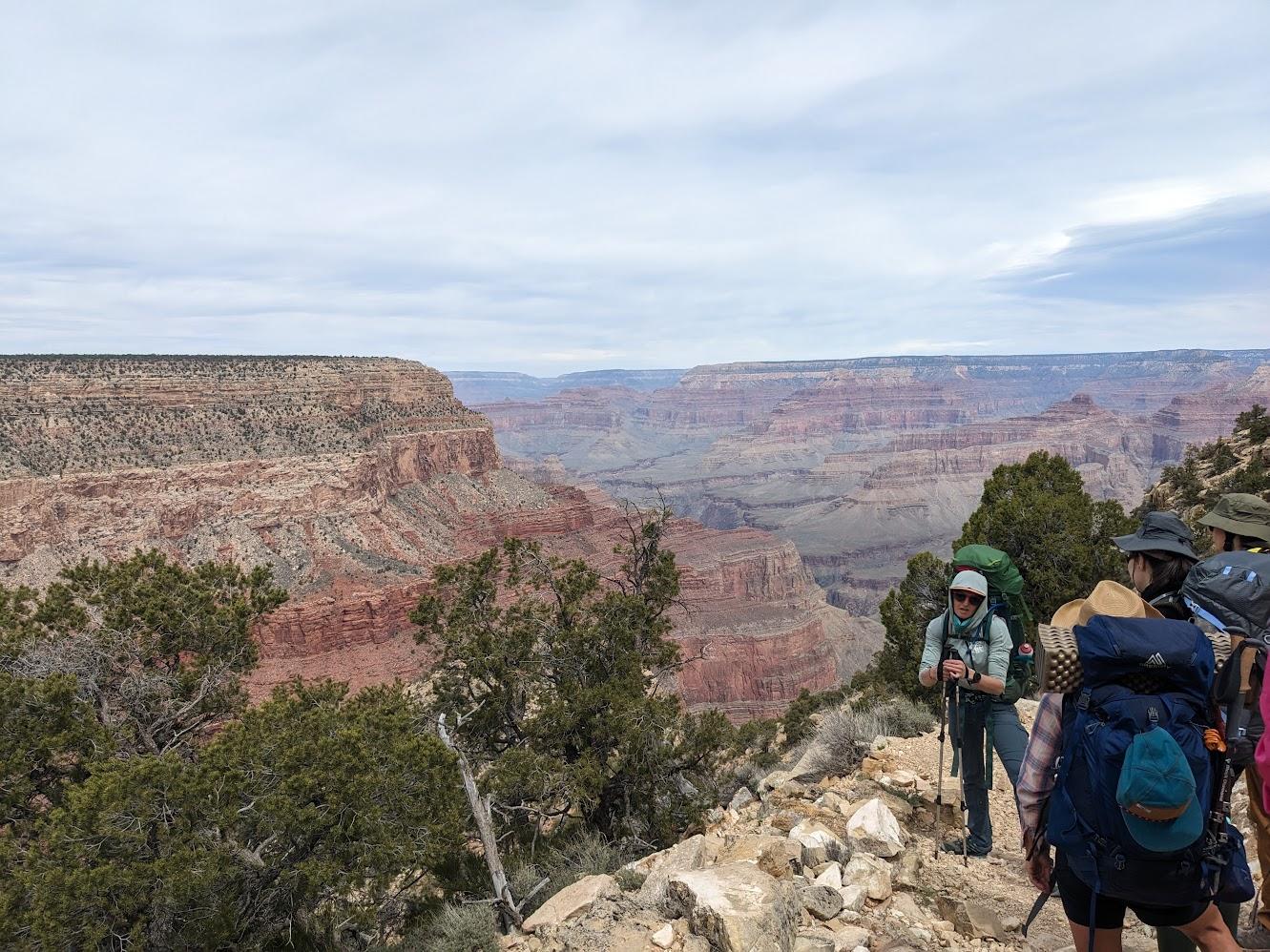
By mid-morning you reach a rest house, refill both bottles, and eat while lizards work the sun-baked stone. A well-run grand canyon backpacking tours tour keeps the pace honest here, matching your steps to the heat and the distance to the next reliable water. You lean into the descent, poles clicking, as the Colorado grows from a rumor to a green thread to an audible river.
Down at the water you drop the pack, soak a bandana, and feel the canyon close overhead — walls a mile high, the sky a narrow band. You camp among tamarisk and cottonwood, listen to the rapids all night, and wake knowing the climb out waits. The route up is slower, hotter, and quieter, every switchback a small negotiation with the rim you left at dawn.
All the details about your upcoming adventure in one place
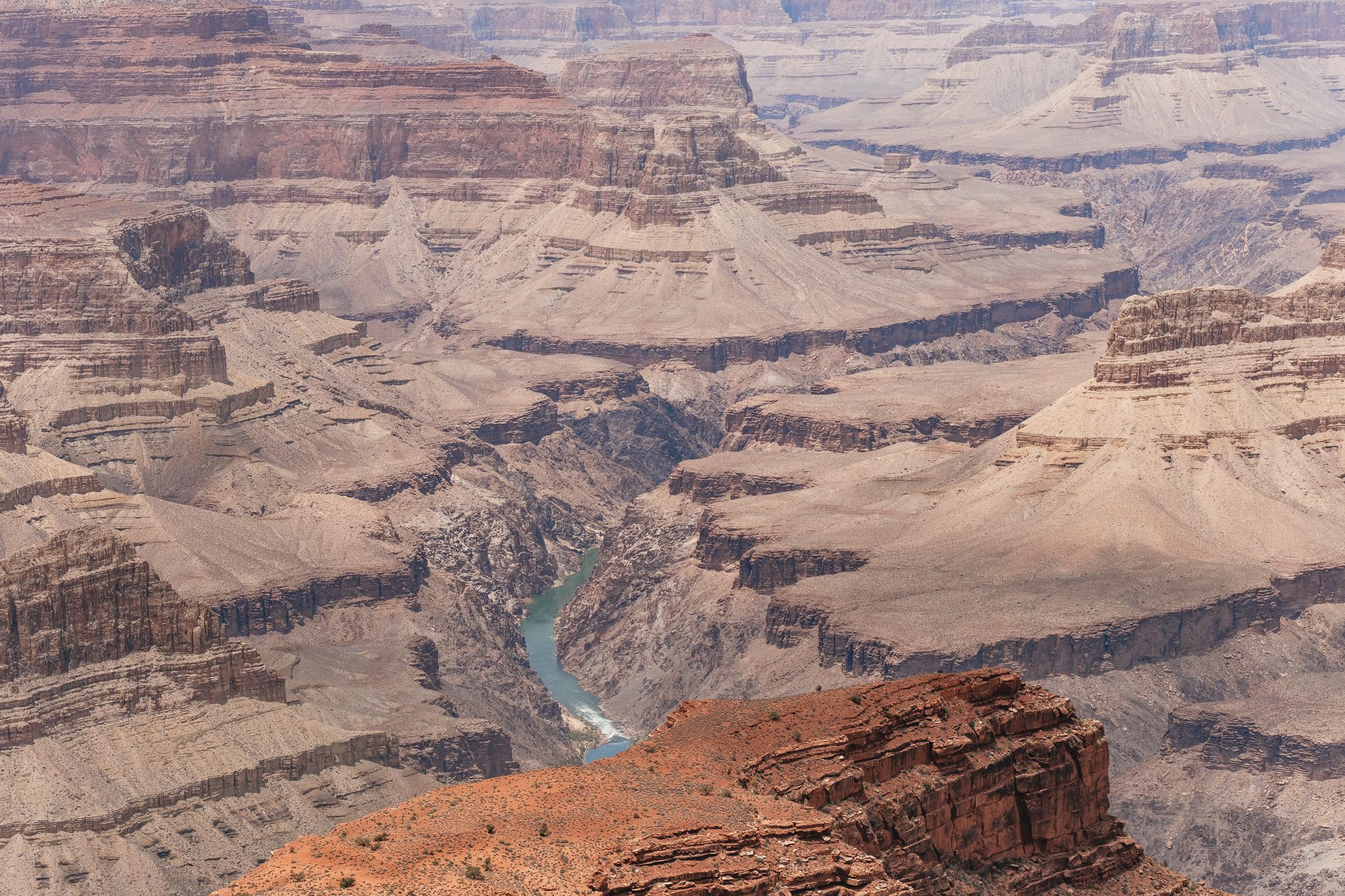
The Colorado River has been cutting the Grand Canyon for close to six million years, exposing rock almost two billion years old at its base. The rims stand roughly ten miles apart and more than a mile above the water, a scale that photographs and maps have never quite conveyed.
Few landscapes compress so much geologic time into a single view. Grand Canyon backpacking tours trade the crowded rim overlooks for that vertical record, a rim-to-river trek that drops through limestone, sandstone, and schist toward the ribbon of green and silver a mile below.
The canyon was designated a national park in 1919, though people have lived in and around it for thousands of years, and eleven Native American tribes still hold ancestral ties to the gorge. Most of its nearly five million annual visitors never step beyond the paved edge. That gap is the whole point of going lower. Grand Canyon backpacking tours tickets route walkers onto corridor trails like the Bright Angel and the South Kaibab, where the crowds thin with each switchback and the temperature can climb sharply with every hundred metres of descent.
Every stratum carries its own chapter. Guided Grand Canyon backpacking tours read these layers in order — pale Kaibab limestone at the top, the red Supai and Hermit shales laid down by vanished deserts and floodplains, and the dark Vishnu schist at the bottom that predates complex life entirely. Springs near Indian Garden feed cottonwoods and willows, and the cliffs shelter bighorn sheep and the California condors that were brought back from near extinction in the 1990s. Phantom Ranch, the only lodging below the rim, sits at the confluence of Bright Angel Creek and the Colorado, a cluster of stone cabins designed by Mary Colter in 1922.
The scale resists a single photograph and rewards patience. Well-paced grand canyon backpacking tours tours match the descent to the heat, carry water between reliable sources, and save the long climb back for cooler hours. On foot, walkers register what the overlooks flatten: the widening bands of colour, the growing roar of the rapids, the way temperature and even plant life shift with altitude. The canyon becomes a place to travel through rather than glance at from the edge.

Few landscapes compress so much geologic time into a single view.
For Grand Canyon backpacking tours, dressing in layers is essential due to extreme temperature shifts between the rim and the inner canyon. Moisture-wicking base layers, an insulating fleece, and a windproof outer shell protect against sudden rain.
Wilderness security regulations require all Grand Canyon backpacking tours to store food in park-approved animal-proof containers. Backpacks must be packed carefully to balance weight, and park rangers may inspect permits at backcountry checkpoints.
Photography is permitted for personal use along all trails and camp locations. Commercial photography requires a special use permit from the National Park Service. Tripods are allowed but must not block narrow trail sections or obstruct mule train traffic.
Most Grand Canyon backpacking tours are recommended for children aged 12 and older due to steep drops and heavy physical demands. Parents must ensure children are prepared for long distances and can carry their own gear.
Due to the rugged, unimproved wilderness trails, standard Grand Canyon backpacking tours are not accessible for wheelchair users. The steep elevation change and uneven stone steps present severe obstacles.
Participants on Grand Canyon backpacking tours must carry all of their own water purification systems and meals. Dehydrated meals are recommended to keep pack weight manageable.
Opening Hours
00:00–23:59
Address
1 Backcountry Road, Grand Canyon Village, AZ 86023
Best Arrival
06:00–09:00
Permit Office Phone
+1-928-638-7875
Official Website
https://www.nps.gov/grca
Car · 1.5 hours · 35 USD park vehicle fee
Drive north from Flagstaff via US-180 directly to the park entrance. Parking is available at the Backcountry Information Center lot.
Public transport · 2 hours · Starts at 40 USD
Take the Arizona Shuttle or Groome Transportation from Flagstaff directly to Grand Canyon Village.
Taxi · 15 minutes · Approx 25 USD
Local taxi services operate between the gateway town of Tusayan and the South Rim trailheads.
Permit cancellation policies for Grand Canyon backpacking tours vary by provider, but national park backcountry permit fees are non-refundable. Non-US residents must pay the 120 USD entry fee, which is valid for 7 days.
Recommended time
3 to 5 days (grand canyon backpacking tours tours typically span this range; grand canyon backpacking tours tickets are required for camping)
Booking a fully guided grand canyon backpacking tours tour ensures professional wilderness guides handle the steep descent, meal planning, and safety logistics for a safe inner-canyon trip. For independent hikers, securing a backcountry permit for these Grand Canyon hiking trips is mandatory before setting up camp at Bright Angel or Cottonwood campgrounds. Regardless of your group's experience, most grand canyon backpacking tours require beginning the daily trek at dawn to bypass the scorching midday heat inside the inner gorge. This early departure strategy is critical when navigating demanding paths like the South Kaibab Trail, where shade is virtually nonexistent and temperatures regularly exceed one hundred degrees.
Crowd levels through the day
Weather · crowds · average price — dots go green to amber to red as each metric rises.
Spring is the premier season for Grand Canyon backpacking tours because wildflowers bloom and temperatures are moderate. Daytime highs in April average 70°F (21°C) at the rim, though the canyon floor can reach 80°F (27°C). Wilderness permits during these months are highly competitive.
Summer brings extreme, dangerous heat inside the inner canyon, with temperatures regularly exceeding 100°F (38°C) near the Colorado River. Backpacking is only recommended for highly experienced desert hikers who start before dawn. Severe afternoon monsoon storms frequently occur in July and August.
Fall offers excellent hiking conditions as the summer heat subsides and the air clears. October brings pleasant daytime temperatures averaging 65°F (18°C) at the rim. This is a popular season for overnight hikes in the Grand Canyon.
Winter brings snow to the canyon rims, creating icy conditions on the upper trail sections. Inner canyon temperatures remain mild, averaging 55°F (13°C) during the day. Traction devices like crampons are required for safe descent on the South Kaibab Trail.
Submit your application during the early access lottery four months in advance. Permits sell out almost instantly for peak months like April and October.
Check the park's official website for updates on pipeline breaks before starting. Always carry backup chemical treatments or a portable filter.
Prepare for the steep elevation change by hiking with a loaded backpack weeks before your trip. The downhill descent can be extremely punishing on knees and joints.
Always yield to mule trains by stepping off the trail on the uphill side. Stand quietly and follow the wrangler's instructions until they pass.
Prevent hyponatremia by consuming electrolyte replacements alongside regular water. Eating salty snacks is as important as drinking water in dry heat.
Temperature differences between the South Rim and the canyon floor can exceed 25°F. Pack clothing suitable for both freezing rim mornings and warm canyon days.
1 Backcountry Road, Grand Canyon Village, AZ 86023
Meet your guide at the main lobby near the permits counter between 06:00–09:00.
Get directionsThe corridors that shape grand canyon backpacking tours began as Indigenous routes. The Havasupai traveled them long before prospectors came. In 1890 Ralph Cameron and his partners widened the old path below the South Rim. By 1903 Cameron operated a toll gate on the Bright Angel Trail. He charged one dollar for each traveler who passed. Mining claims disguised a profitable tourism venture beneath the rim. The young Park Service resented his grip and fought it in the courts for two decades. To break that monopoly, the government built a rival descent. Work on the South Kaibab Trail began in 1924 and reached the river in 1925. Engineers blasted switchbacks straight through exposed ridgelines of Cedar Ridge. Unlike the Bright Angel route, the new trail held no spring water. That single decision still governs every grand canyon backpacking tours tour along its spine. In 1928 Cameron finally lost his claim, and the Bright Angel Trail passed into public hands. Beside Bright Angel Creek, Phantom Ranch opened in 1922 at the base of the gorge. Architect Mary Colter designed its low cabins from native stone and rough timber. Mule trains hauled every board, beam, and sack of cement down the steep grade. The ranch fixed a permanent waypoint at the canyon floor. Modern grand canyon backpacking tours tours still trace these century-old switchbacks. Its stone walls remain a quiet record of that early rivalry between prospector and park. What survives is a layered story visitors can still walk today. Guided grand canyon backpacking tours build directly on Cameron's contested line and the Park Service answer to it. These historic Grand Canyon rim-to-river trails now carry thousands of hikers each season. Demand runs high, so grand canyon backpacking tours tickets and Phantom Ranch bunks often vanish months ahead. The rivalry between miner and government ended long ago, yet its stone-and-mule engineering endures at the canyon floor.
Ralph Cameron and partners improved the old Indigenous path below the South Rim.
Cameron operated a toll gate on the Bright Angel Trail, charging one dollar per traveler.
Phantom Ranch opened on the canyon floor, with cabins designed by architect Mary Colter.
The National Park Service completed the South Kaibab Trail to break Cameron's monopoly.
Cameron lost his mining claims, and the Bright Angel Trail passed into public control.
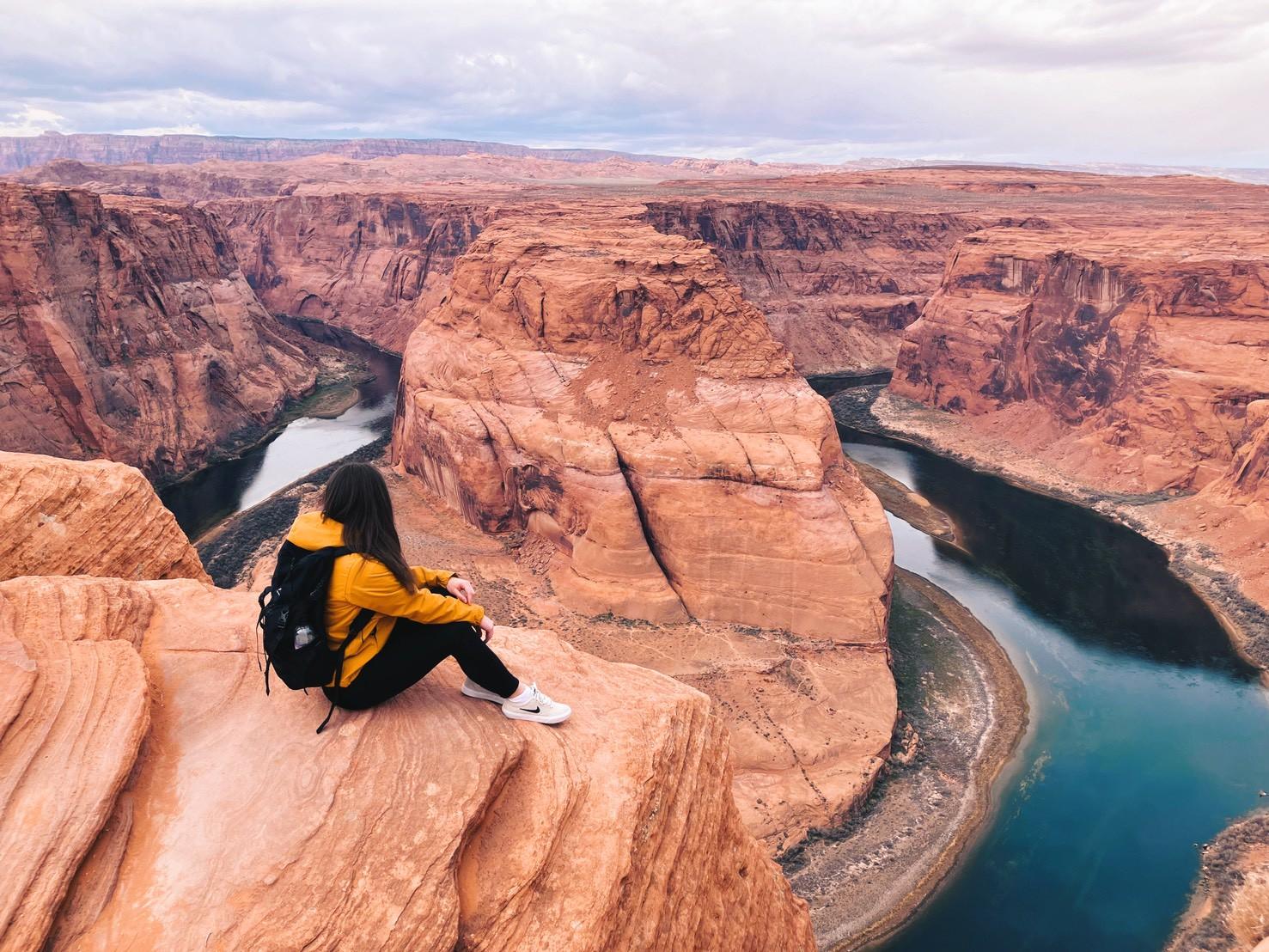
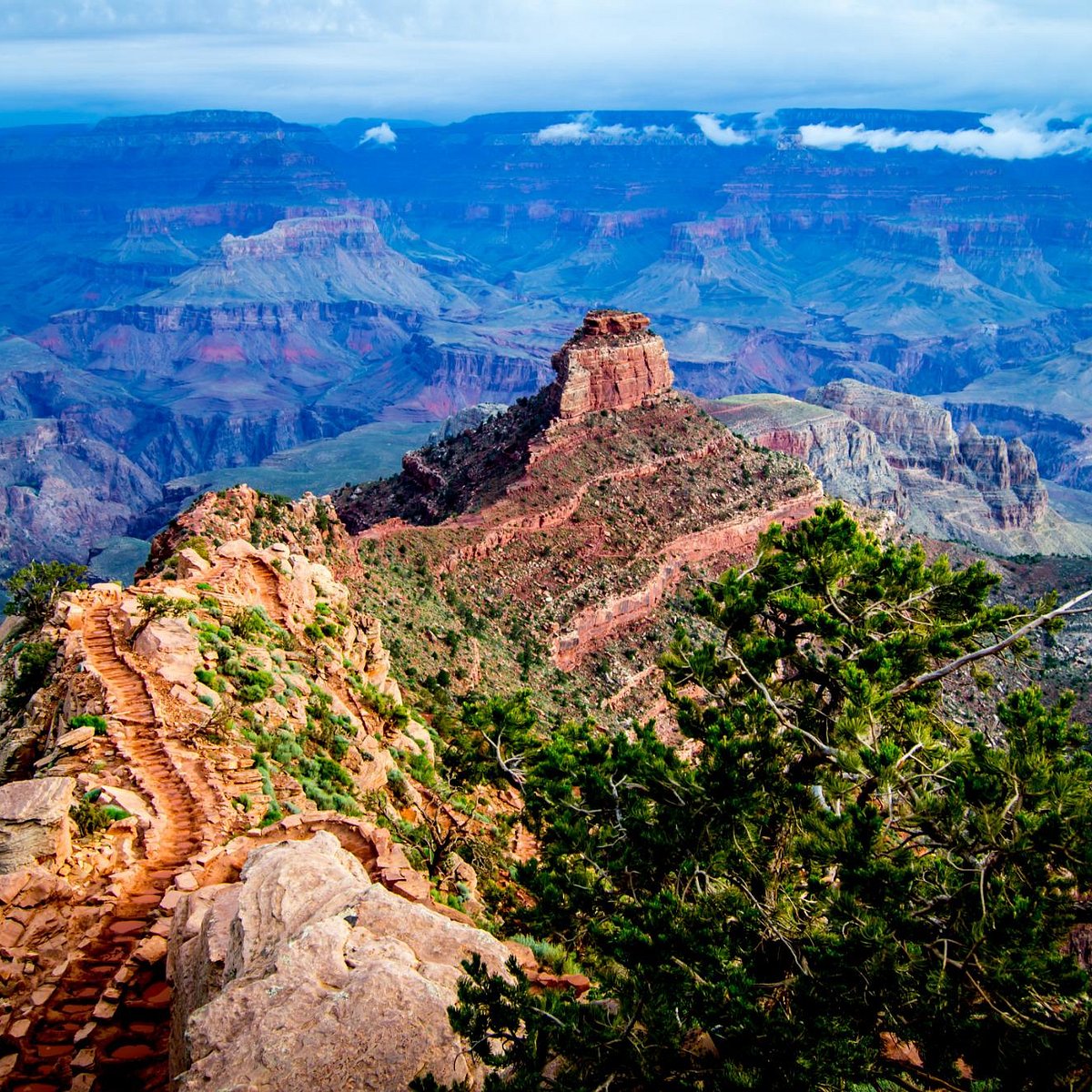
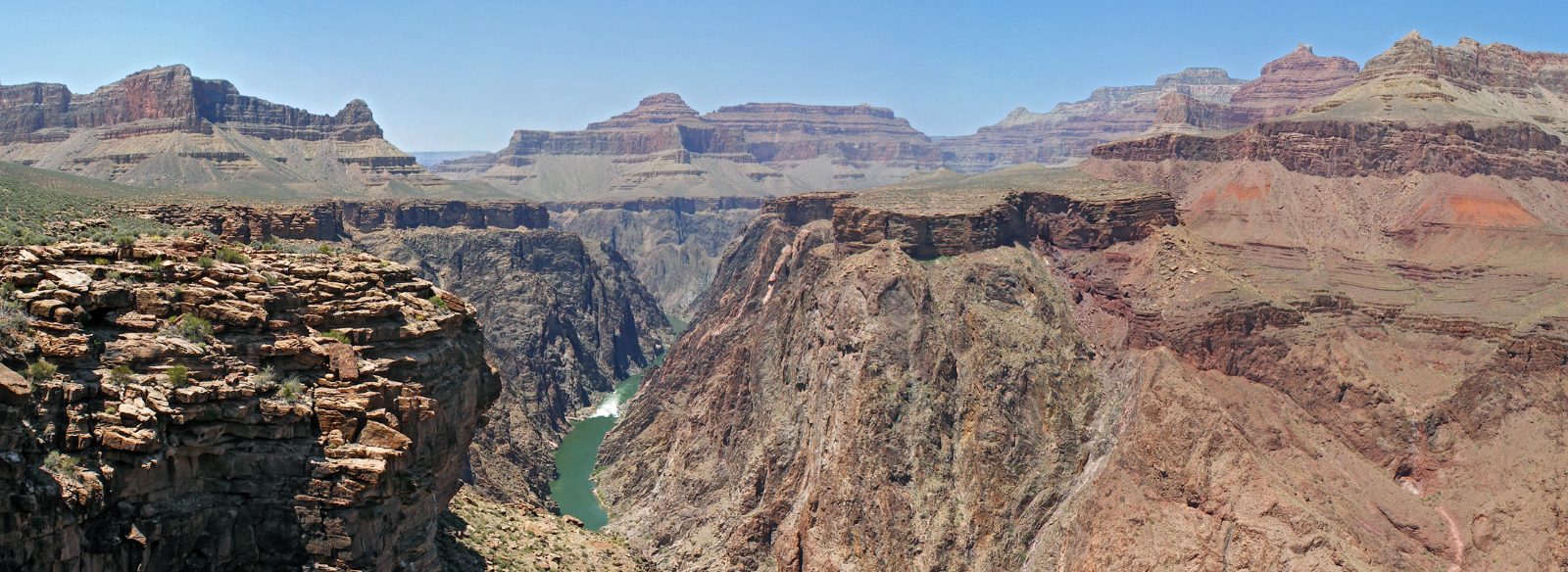
Perched on a dramatic shale platform jutting out over the Colorado River, this viewpoint offers a panoramic look at the inner gorge. Framed from the edge of the plateau, the canyon walls display deep shadows and contrasting orange hues. It is a highlight on many grand canyon backpacking tours that follow the Bright Angel Trail.
Hidden in a side canyon off the North Kaibab Trail, this oasis features a waterfall plunging onto a massive moss-covered travertine dome. Hikers can capture the mossy formations by wading across Bright Angel Creek and standing directly behind the cascading veil. Many visitors book grand canyon backpacking tours tickets to secure this inner canyon backpacking trip.
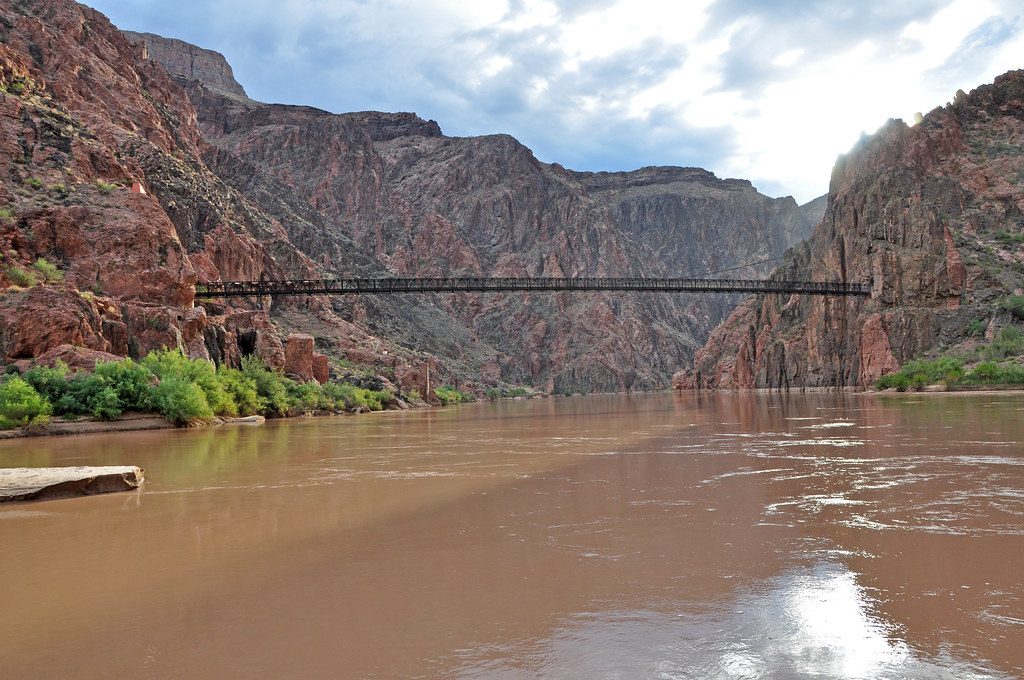
Spanning the Colorado River, this historic suspension bridge connects the South Kaibab Trail with Phantom Ranch. Capturing the metal structure against the dark Vishnu schist walls provides a sense of scale for the deep canyon environment. Backpackers often cross it during a multi-day grand canyon backpacking tours tour.
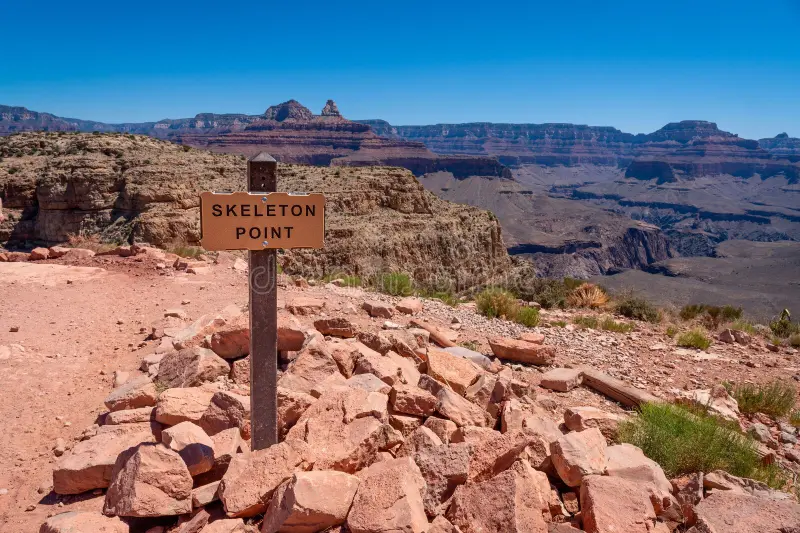
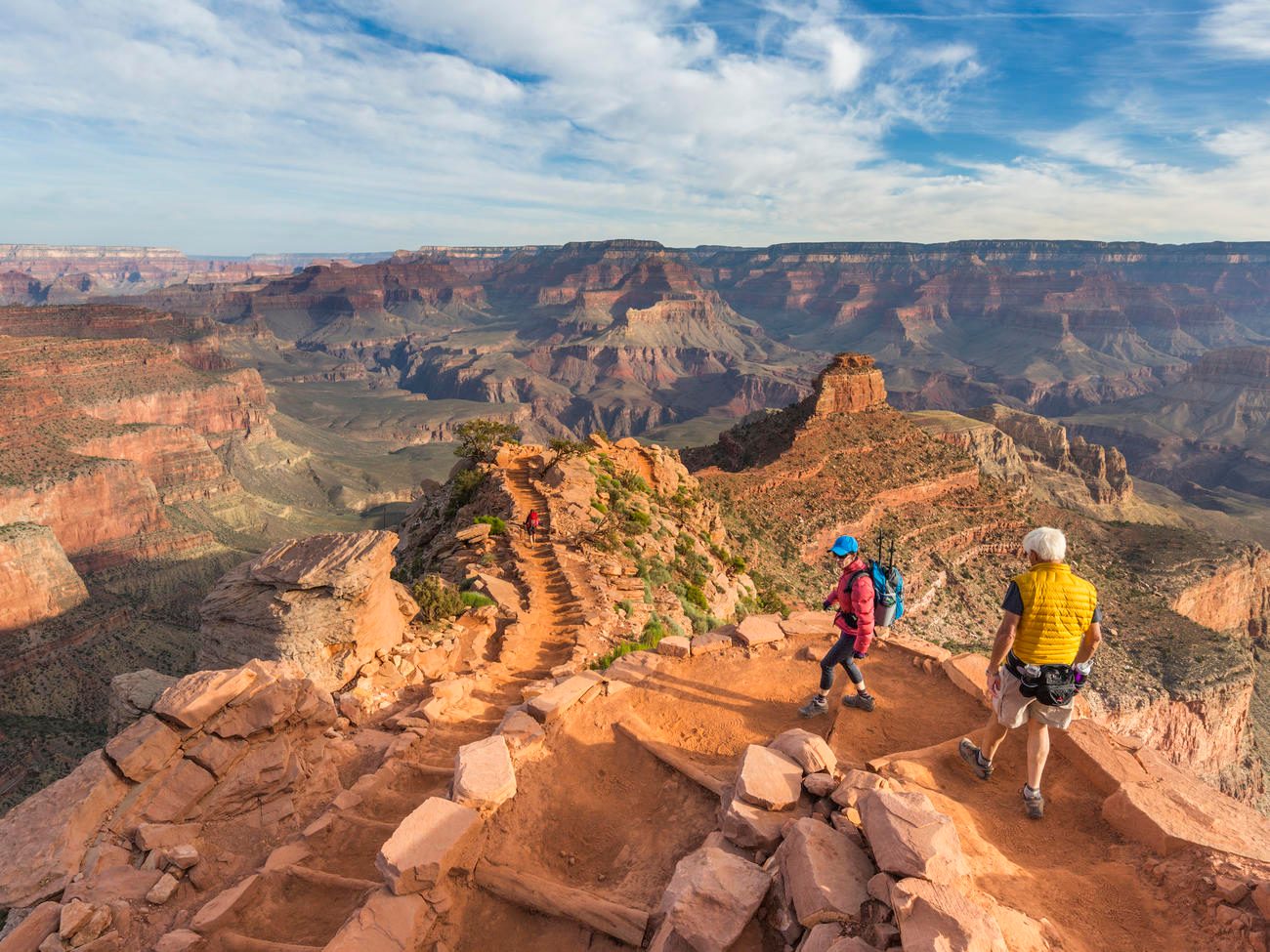
Located along the South Kaibab Trail, this ridge offers the first glimpse of the Colorado River winding through the canyon floor. Standing on the exposed switchbacks allows photographers to capture the dramatic descent of the trail below. This scenic vantage point is a popular resting spot for those on grand canyon backpacking tours tours.
Embarking on grand canyon backpacking tours with children requires meticulous preparation and realistic expectations regarding steep wilderness descents. While the rim offers flat, paved walking paths, descending below the rim exposes families to extreme temperature shifts and rugged terrain.
Inner-canyon hiking is best suited for children aged 8 and older who have proven endurance. If you are planning a grand canyon backpacking tours tour with younger children, consider staying on the paved rim paths or booking cabin stays at Phantom Ranch.
Wheeled baby buggies and strollers are strictly prohibited on all trails below the rim. Parents must use a sturdy hiking carrier for younger children, and remember to secure grand canyon backpacking tours tickets or wilderness permits well in advance.
Descending the Bright Angel Trail is relatively easy, but climbing back up takes twice as much effort and time. Ensure children carry a dedicated hydration pack and take regular rests, especially when coordinating independent grand canyon backpacking tours tours.
Keep children within arm's reach at all times, as many scenic overlooks lack safety railings. During Grand Canyon backcountry trips, safety is paramount; pick up a free Junior Ranger booklet at the visitor center to keep kids engaged during rest breaks.
Preparing meals is a vital step for grand canyon backpacking tours. Hikers can choose between South Rim lodges or dining options at the canyon floor.
Located at the bottom of the canyon, this historic dining hall requires advance reservations for its hearty breakfasts and stew dinners. For hikers holding inner-canyon permits, these bookings act like grand canyon backpacking tours tickets to a hot meal. Hikers passing by can purchase snacks, coffee, and cold lemonade from the side window.
Located near the start of the Bright Angel Trail, this casual eatery offers grab-and-go options, burgers, and pizzas. It is a popular spot for hikers comparing different grand canyon backpacking tours tours before starting their descent. No reservations are needed, making it ideal for a quick pre-hike or post-hike bite.
This historic venue offers sit-down lunches and dinners with classic Southwest influences on the canyon rim. Completing a grand canyon backpacking tours tour is often celebrated here with a fine steak or prime rib. Dress code is casual but neat, and booking weeks in advance is highly recommended.
Everything you need to know for your journey
To camp overnight in the canyon, you must apply for a permit via the early access lottery on Recreation.gov four months in advance. Walk-in permits can be obtained at the Backcountry Information Center during the best arrival window of 06:00–09:00.
Spring and autumn are the ideal times due to moderate temperatures and lower risks of heat exhaustion. Guided Grand Canyon trekking tours are highly popular during these pleasant months.
Essential items include high-calorie food, a reliable water filter, durable hiking boots, and a quality headlamp. Keep your pack weight as light as possible to ease the strenuous climbs.
Potable water stations are available seasonally at designated campgrounds like Cottonwood Campground. Hikers must always carry backup filtration methods as pipeline breaks are common.
Preparing for Grand Canyon backpacking tours requires weeks of cardiovascular training and hiking with a weighted backpack. The extreme elevation change of over 4,000 feet demands excellent physical conditioning.
While Grand Canyon backpacking tours can be family adventures, they are physically grueling and recommend kids be at least 12 years old. Parents must ensure children are prepared for long distances and can carry their own gear.
Authorized commercial guides handle all permits and logistics for Grand Canyon backpacking tours, so you can purchase booking vouchers directly from their websites. Individual backcountry permit fees must be paid through the official Recreation.gov platform.
Compost toilets are located at major checkpoints along Grand Canyon backpacking tours routes, including Bright Angel Campground. Pack out all toilet paper and personal hygiene products where facilities are not available.
Wilderness permits for Grand Canyon backpacking tours are non-refundable. The individual entry fee of 120 USD for non-US residents is also non-refundable but remains valid for 7 days.
No, pets are strictly prohibited on Grand Canyon backpacking tours below the rim due to extreme heat and trail hazards. They are only permitted on paved rim paths while kept on a leash.
A popular canyon overlook providing panoramic views of the central corridor. Visitors gather here for sunrise and sunset viewings.
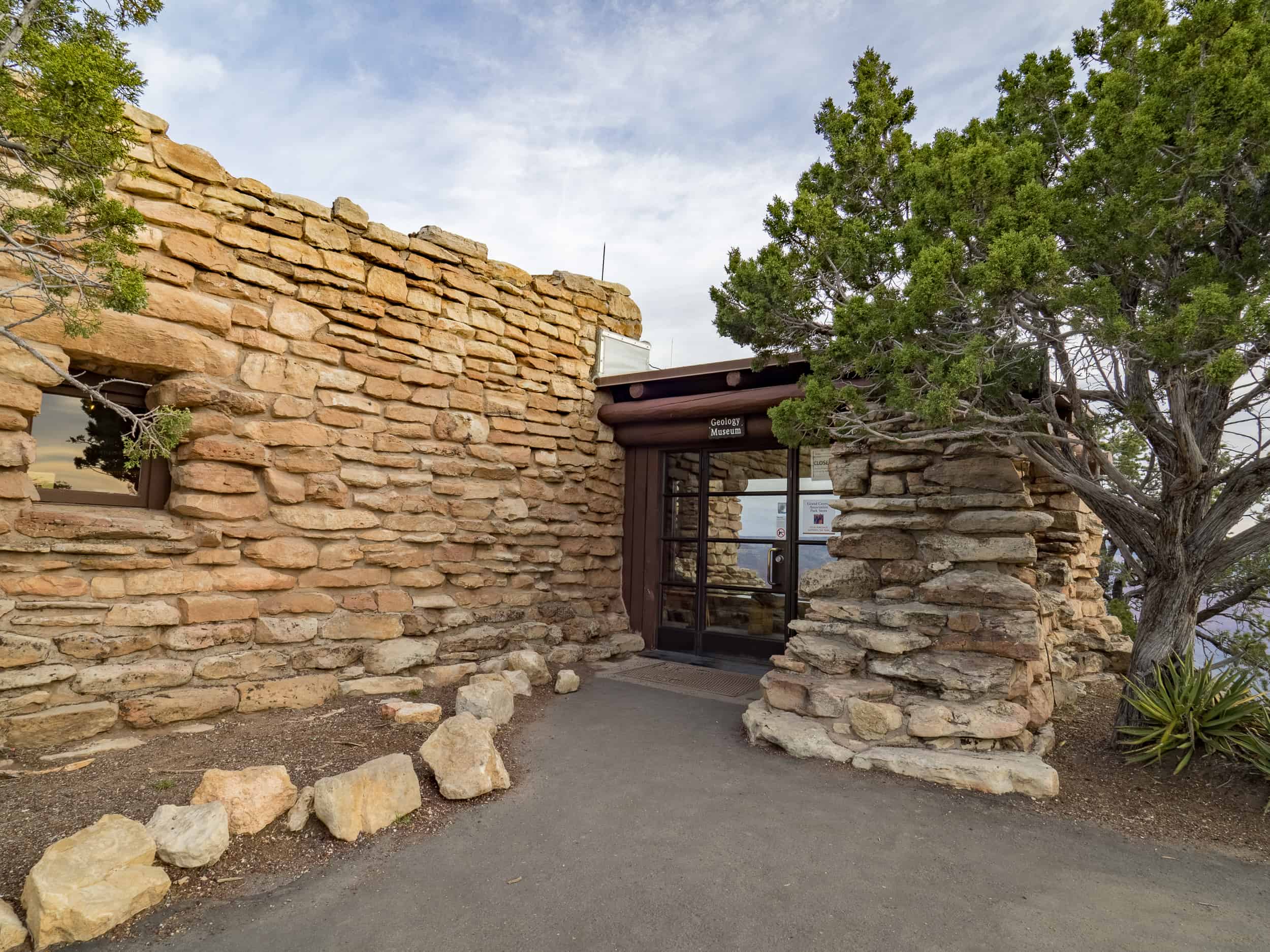
Features detailed geologic exhibits and a large relief map of the canyon. The historic building offers expansive views through large observation windows.
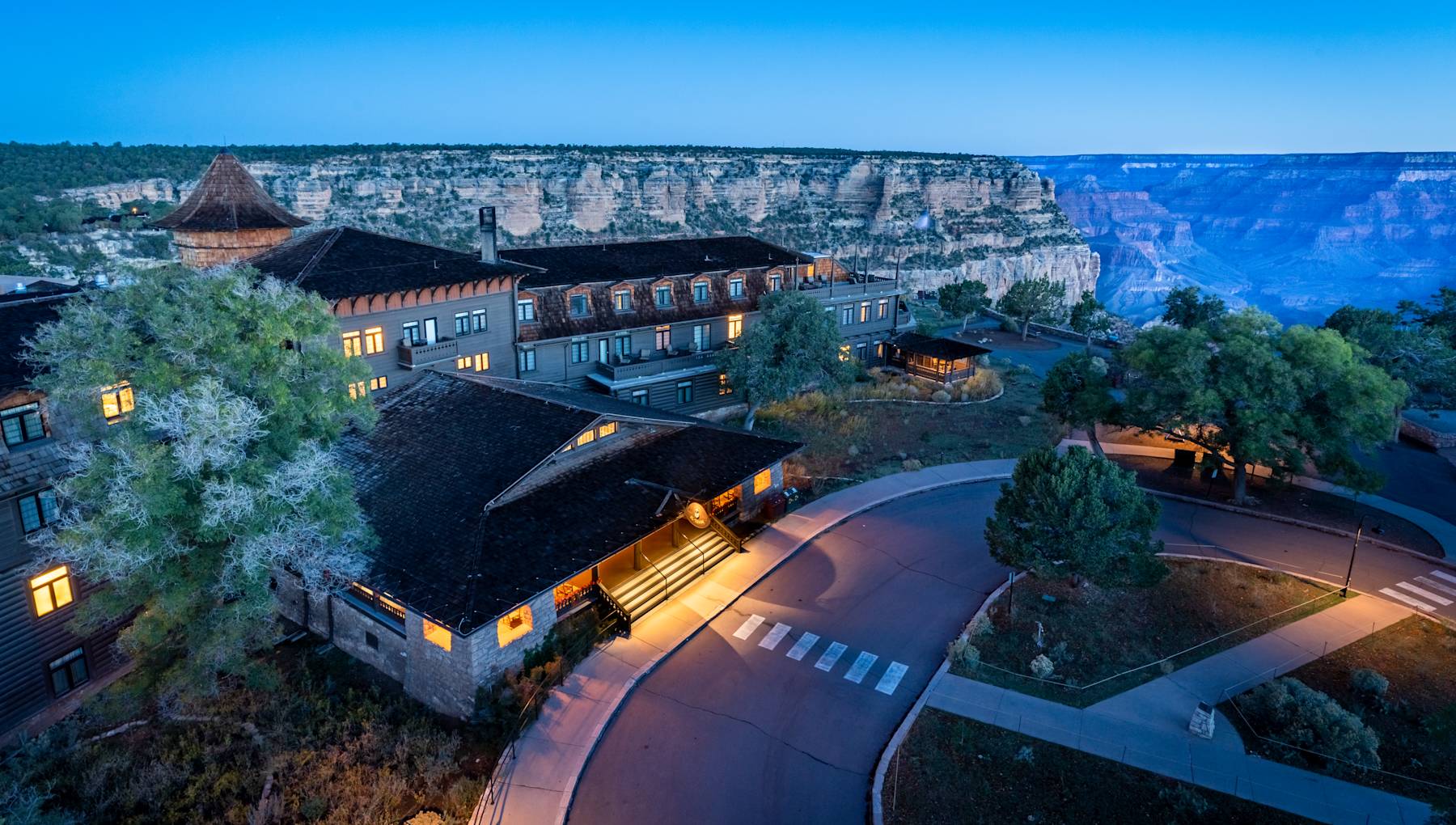
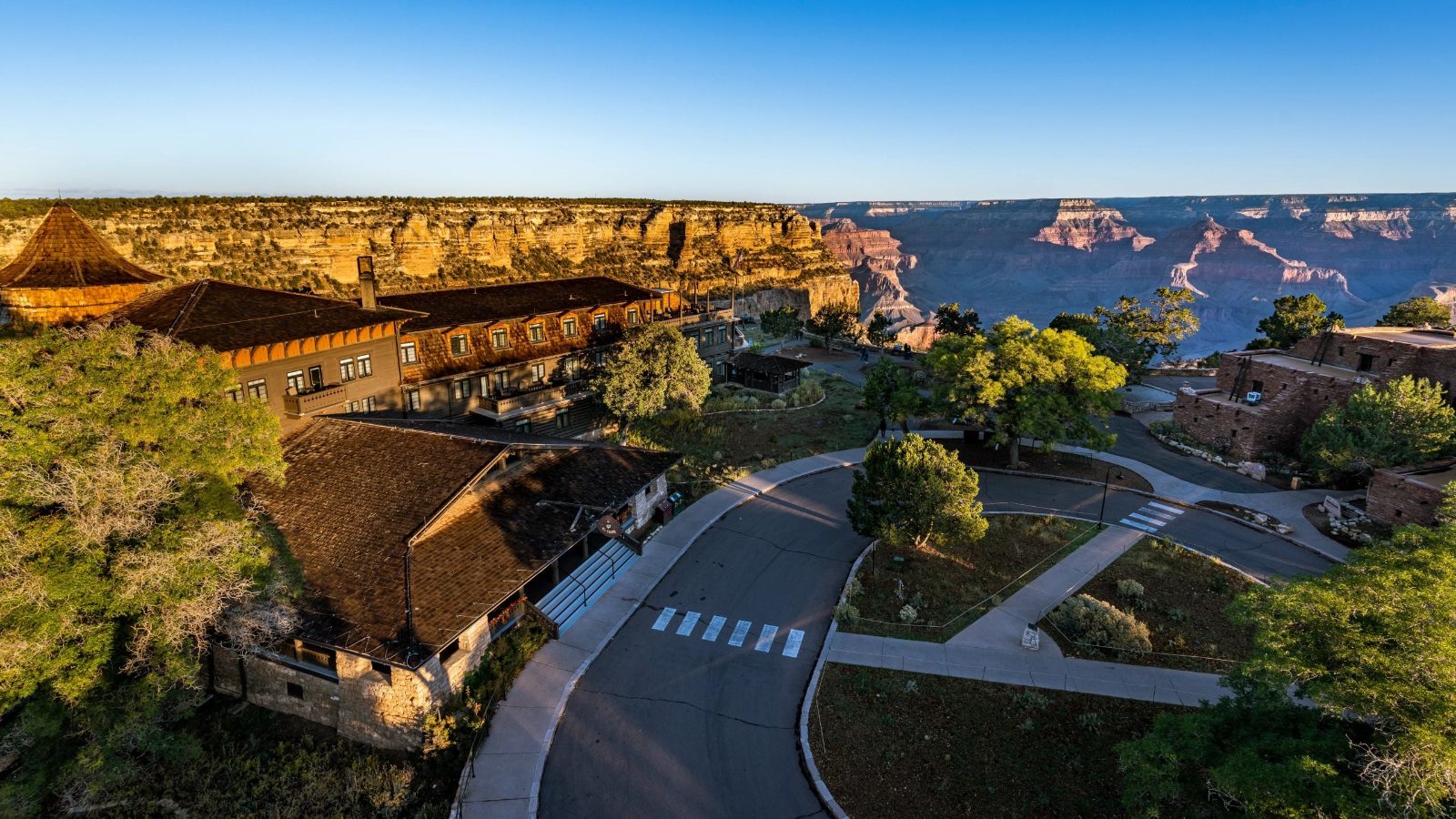
A historic hotel built of local stone and Oregon pine in 1905. It represents classic national park rustic architecture.
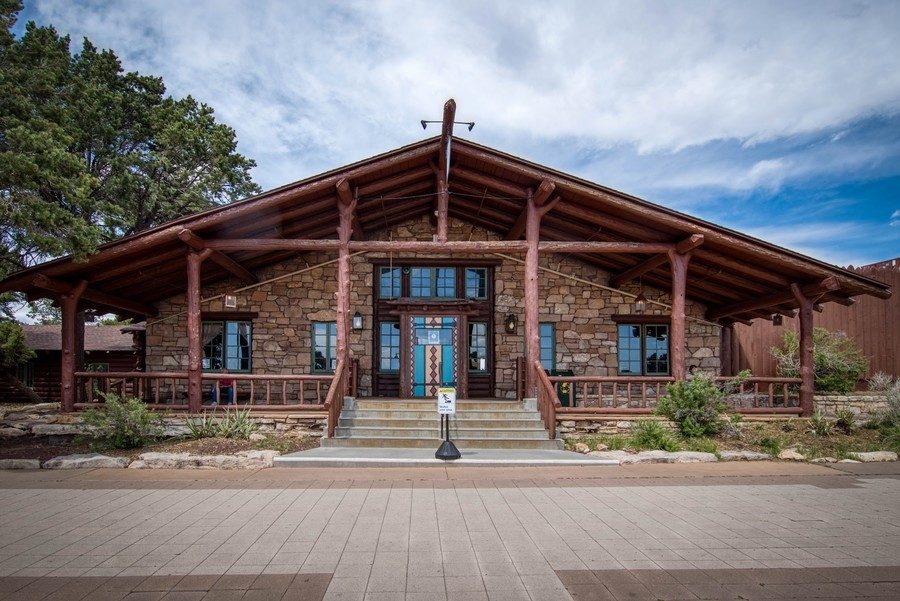
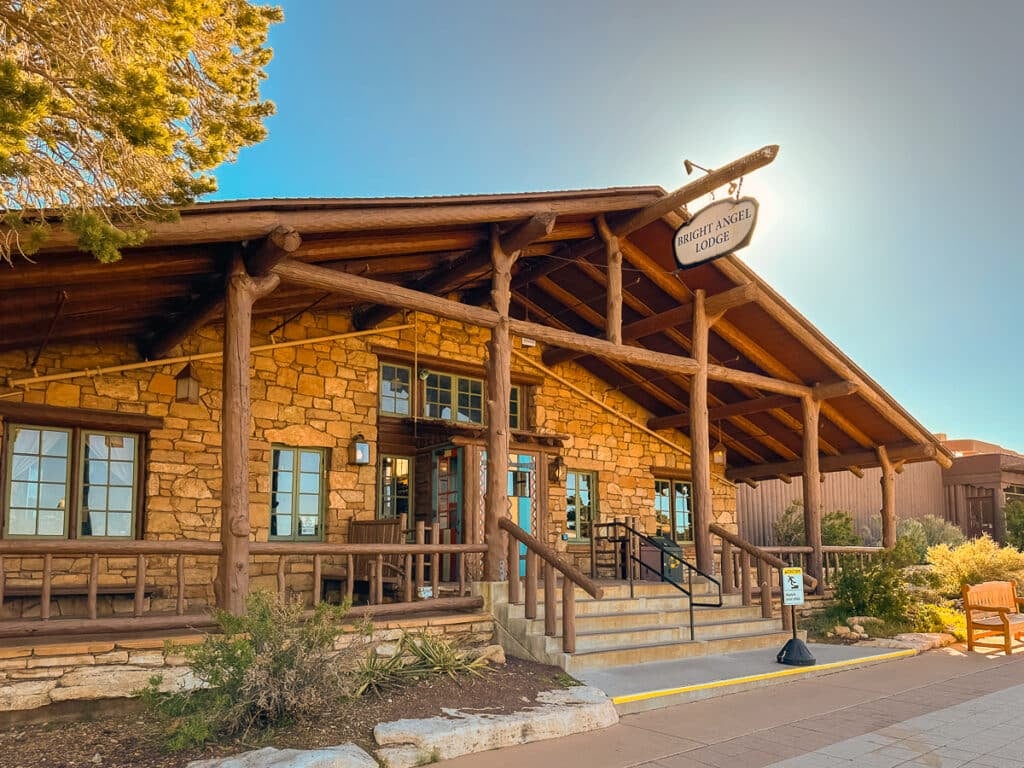
Designed by architect Mary Colter, this historic lodge serves as a primary hub for rim activities.
A historic lodge perched directly on the canyon rim, offering fine dining and rustic elegance.
Provides cozy cabins and lodge rooms near the main trailhead with easy access to transit.
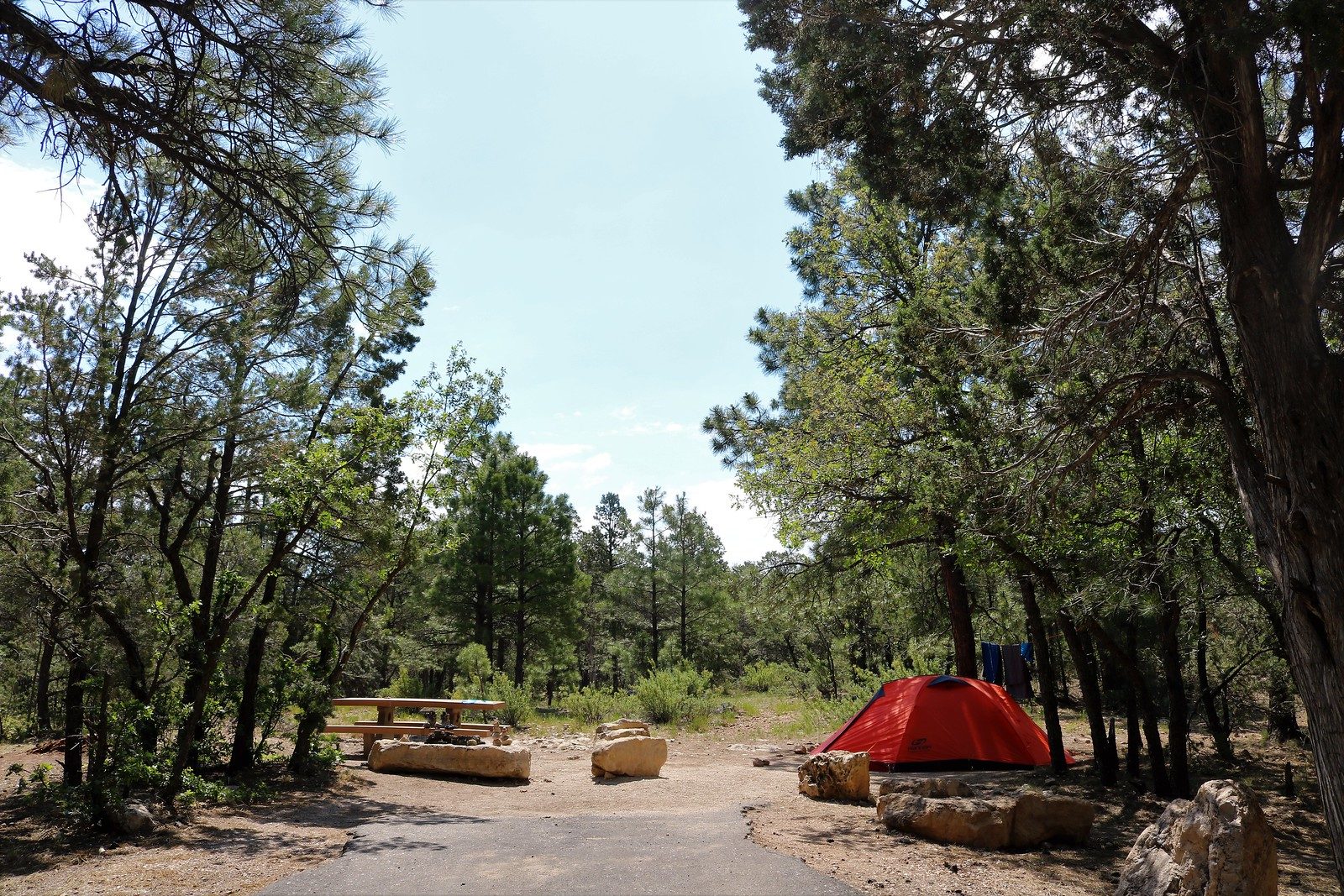
A wooded campground offering tent and RV sites close to the village amenities.
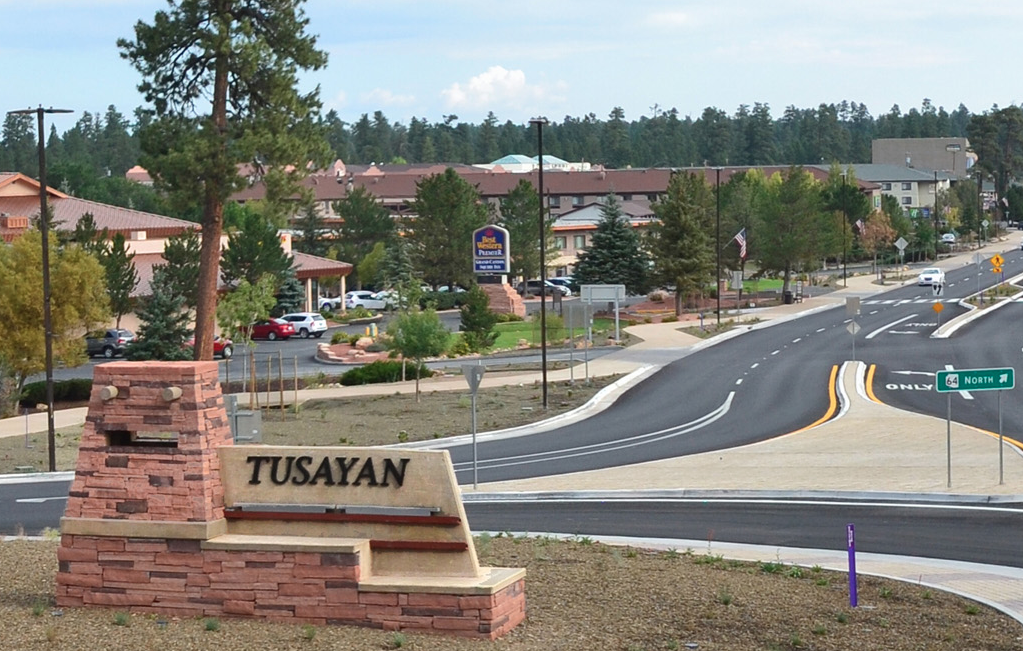
A gateway town just outside the park boundary featuring multiple chain hotels and dining options.
Join thousands of happy travelers who have discovered this incredible experience
Book Your Experience Now